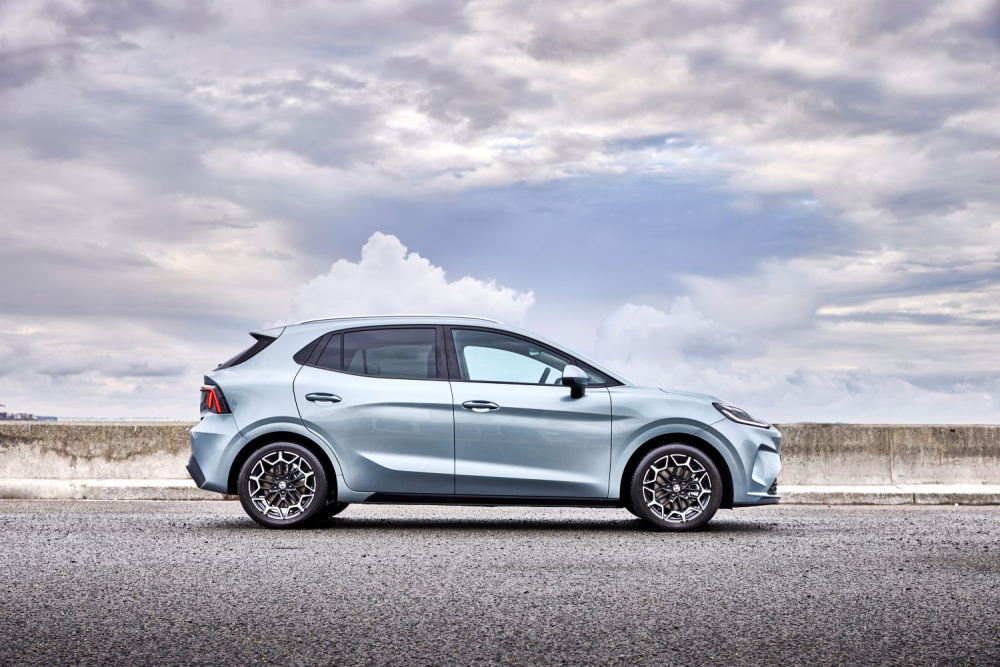
Familar name, different car: the 2026 MG4 EV Urban Essence 54
There’s a point with most new cars where you stop looking at the screen, stop reading the manual and just start driving. With the 2026 MG4 EV Urban, it took about 10 minutes to find one pedal driving, and around 30km to work out how to turn the cruise control on.
It took considerably longer to work out why the car thought a recommended corner speed was the actual speed limit. But once I got past the technology quirks, the MG4 Urban, tested here in Essence 54 trim, started making a lot of sense.
This is MG’s new small electric hatch, and unlike the existing MG4, the Urban is a completely different car underneath. It sits on MG’s newer E3 platform, is front-wheel drive and is aimed squarely at buyers who want an affordable EV that behaves like a normal car.
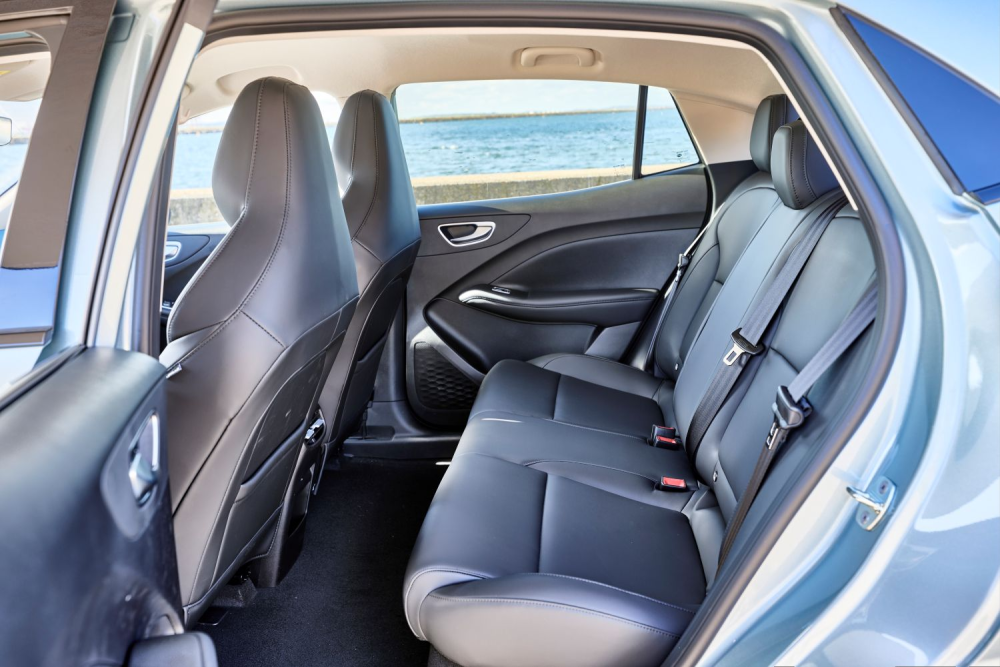
That last bit is important. Because after spending time in the MG4 Urban, my biggest takeaway is just how conventional it feels. And that’s a compliment. Climb inside, and the first thing that strikes you is the amount of room.
The driver’s compartment feels spacious and open, with a good view in pretty much every direction. The seating position works well and there’s enough adjustment to find a comfortable spot without feeling like you’re sitting on top of the car.
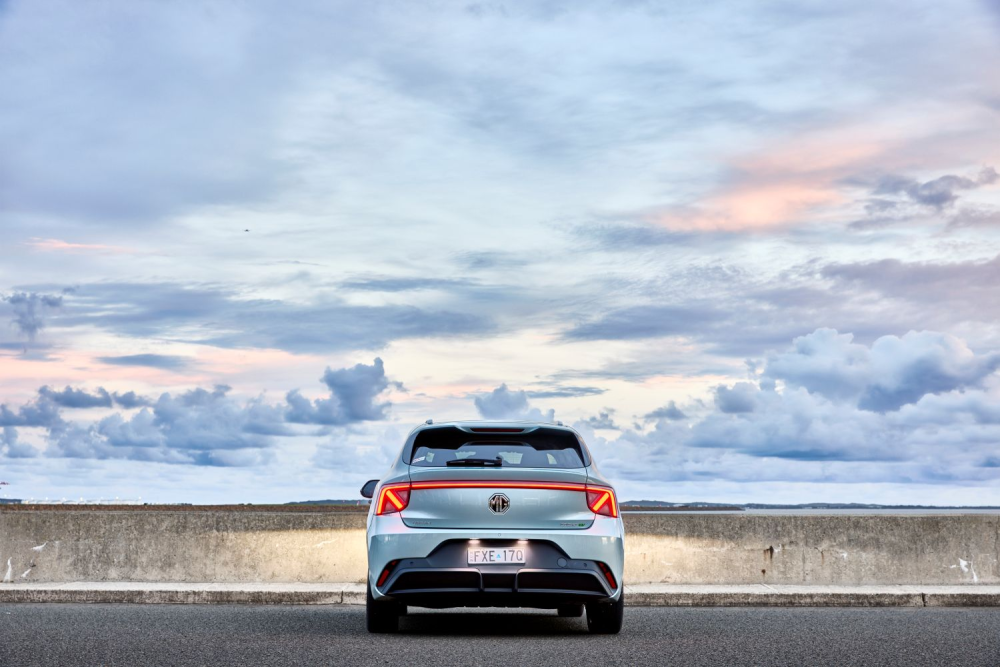
I particularly like being able to drive with my left elbow resting on the centre console, right elbow on the door armrest and holding the bottom of the steering wheel. It’s a normal driving position for me and the MG accommodates it nicely.
The side mirrors give a really good view when reversing and, combined with the cameras, makes parking the MG4 Urban is easy. You get distance information regarding obstacles, that’s surprisingly accurate (within a couple of centimetres in testing).
There’s also a 360-degree, top-down view which makes squeezing into tight spots much easier. The MG4 Urban has a tight 10.5-metre turning circle, which is exactly what you want in a city-sized hatch. The boot offers 382-litres of space, expanding to 1266-litres with the rear seats folded.
Most importantly, it’s easy to drive. To me, the MG4 Urban drives like a normal car. There’s no strange EV behaviour, and no feeling that you need to relearn how to drive. There’s also no ridiculous throttle response unless you deliberately ask for it.
Take your foot off the brake and it rolls away from the line, select reverse and it does the same thing and actually moves fairly quickly backwards, even uphill, without touching the accelerator. The steering is light but direct enough and the car responds predictably to inputs.
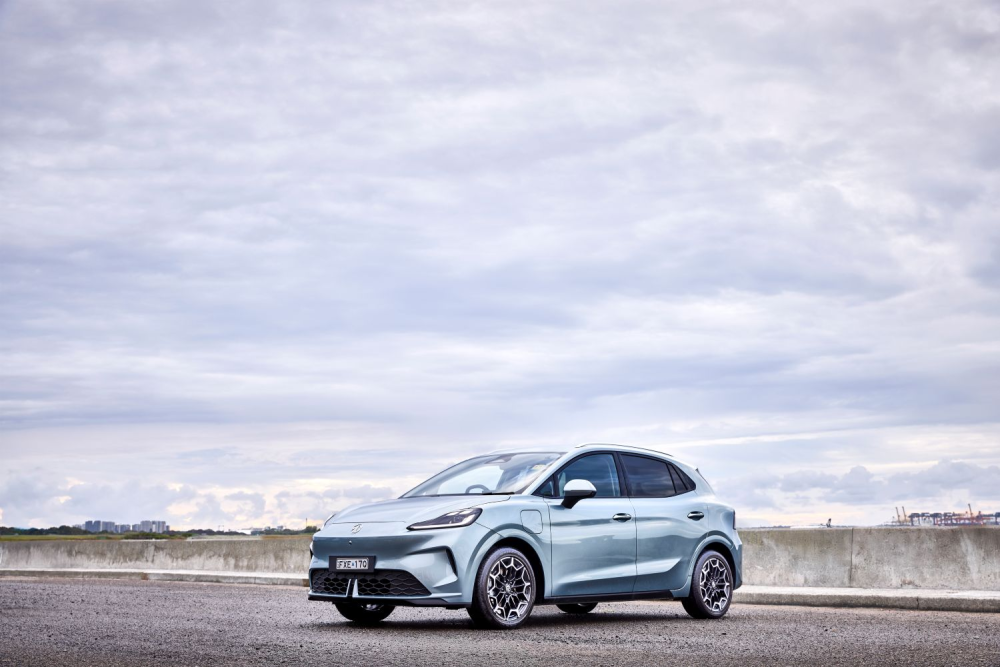
It isn’t pretending to be a sports car, but it feels planted and confident. The suspension is definitely towards the firm side and personally, I like it. Even on the freeway the car feels settled rather than floaty, and around corners and roundabouts it maintains a reassuring level of composure.
I drove it in the wet and never really had a moment where I didn’t feel confident in what the car was doing. Cabin noise is pretty good, even at freeway speeds. The 54kWh LFP battery delivers 118kW and 250Nm to the front wheels.
MG quotes 0-100km/h in 8.7 seconds and a WLTP range of 405km. It averages 16.1kWh/100km, according to the Chinese car maker. We did better than that, getting 12.5kWh/100km and pulling as much as 450km from a single battery charge.
The latter is rated at up to 150kW on a DC fast charger (the 43 variant, which has a smaller battery, is capped at 82-87kW), meaning you can get from 10 to 80 per cent in about 30 minutes. There is vehicle-to-load capability, allowing the battery to supply power to external electrical equipment.
Eco, Standard and Sport alter the throttle/power delivery. You can feel the difference. Initially, I left it in Eco mode because, well, it’s an EV and we’re supposed to be saving power. After about 20km I changed to Sport. The change was immediately noticeable.
Sport gives the accelerator a much sharper response and makes the Urban considerably more lively. It’s not a Tesla Model 3 Performance and nor is it pretending to be, but there is enough shove to make getting into traffic or overtaking easy.
Hard acceleration doesn’t produce huge amounts of torque steer either. The traction control does a good job of managing the front tyres without being overly intrusive. In Standard mode, the MG feels smooth and predictable. The adaptive cruise control is particularly good.
Take off is smooth and there’s a good amount of acceleration without the car feeling like it’s trying to launch itself into the next postcode. In fact, I preferred the MG’s behaviour to my Tesla. There, I’ve said it. It was a mystery to find the button to activate it the first time though.
It could definitely do with a symbol that makes its purpose more obvious. Initially, I changed the regenerative braking to high. It was more noticeable than Low or Standard, but it still wasn’t quite what I’m used to from the Tesla.
Then, about 10 minutes into the drive, I found the One Pedal Drive button. Suddenly the MG4 Urban made a lot more sense to me. With one-pedal driving activated, the car becomes much closer to the way I drive the Tesla.
Lift off the accelerator and the MG slows progressively, recovering energy as it does so. Reverse is different. The car will roll once you release the brake. We liked this as its easier to hover over the brake and let it move itself into a space, rather than try to feather the accelerator.
The only really annoying component of the driving experience is the ADAS safety system. There are so many beeps and random noises to warn you about something that it becomes incredibly frustrating.
The overspeed warning is particularly intrusive, and took us about five minutes before we found the controls to shut it off (which resets every time you drive). The problem is that the system doesn’t always recognise what is actually a speed limit.
At one point it picked up a 45km/h recommended corner speed, and ranted because we were, in its eyes, going to fast. I’m sure after a week or so of owning one, it would become second nature, seatbelt on, foot on brake, select the MG custom Pilot button to shut of the beeps, and drive.
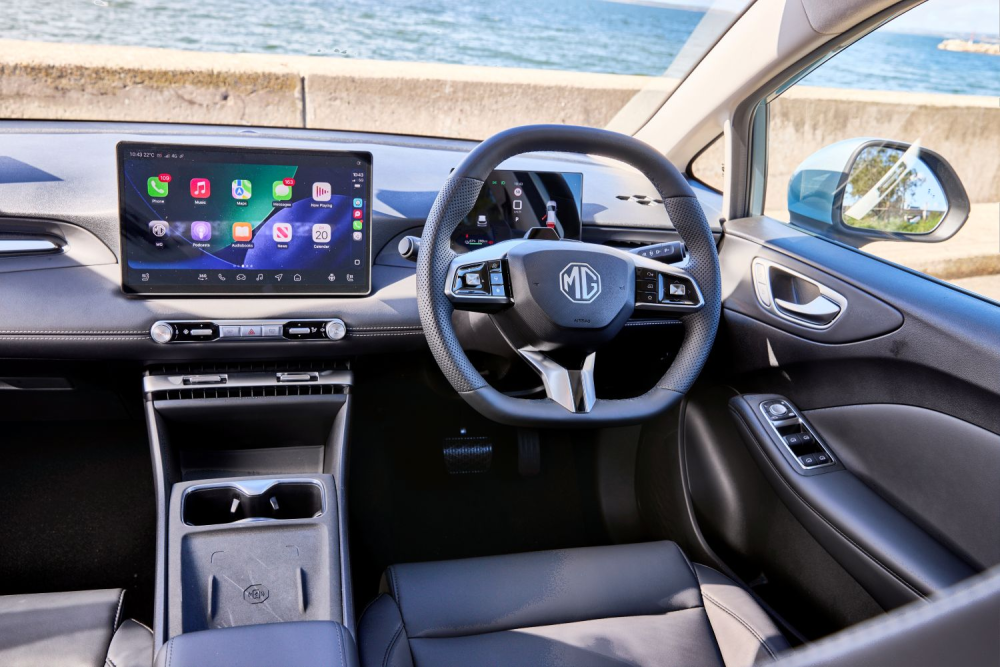
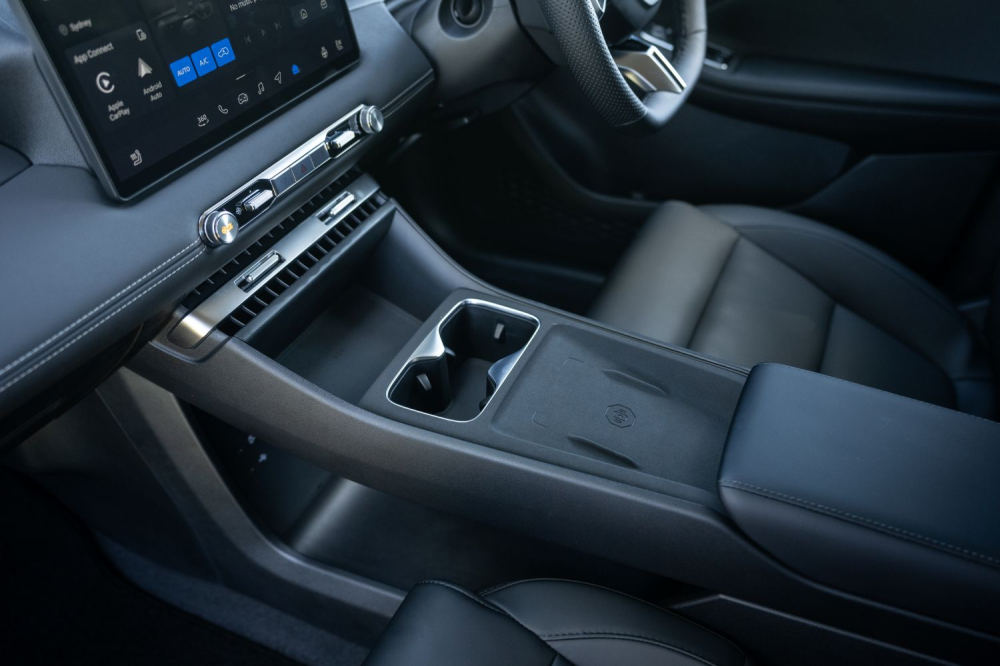
Inside, the cabin is one of the MG’s better features. There are plenty of storage areas, including a good-sized glovebox that can be opened manually, a deep centre console and storage underneath it. My iPhone 17 Plus fits easily in the main holder, that also offers wireless charging.
Down below there’s a 12-volt socket and two USB-C connections. The cupholders, however, are small. They will hold a can, or your coffee but that’s about it. Climate controls are another winner. Instead of burying absolutely everything inside the touchscreen, MG has retained real buttons.
There are physical controls on the air vents, and there’s a proper volume dial too. Our test vehicle seemed to struggle a little with getting the air temperature right, but it wasn’t a deal breaker, and nor are the one step heated seats and steering wheel.
Wireless Apple CarPlay and Android Auto connected easily enough, and is reasonably intuitive. The connection can be slow though, with the 12.8-inch HD touchscreen sometimes taking its merry time to pull across the smartphone.
The aforementioned wireless charging pad isn’t ventilated, so will warm up your device. We did find a few other niggly faults, like the automatic high beam not dipping when it should, and moisture in the tail lights after rain (which is a little concerning).
Overall, the 2026 MG4 EV Urban Essence 54 is an interesting little car. It’s cheap enough, at $34,990 drive away, to get people into an EV without requiring them to completely rethink how they drive, and spacious enough to avoid feeling like a cheap city runabout.
It’s easy to drive, and comfortable in its own firm-riding way. It’s not trying to be a Tesla killer or a hot hatch. It’s simply trying to be a good quality, affordable electric car – and after spending time behind the wheel, I reckon MG has largely nailed that brief.
It’s good enough that we’re considering one as a second car. It’s backed by a 7-year unlimited kilometre warranty.
This article first published on Exhaust Notes Australia.
Once you've found the right car, the next step is sorting out car finance that actually works for your budget. Credit One is Australia's best-reviewed finance broker, with 3,000+ five-star Google reviews from customers who've been through the process. Check out Credit One reviews to see what people say, or head straight to the loan repayment calculator to see what the numbers look like.