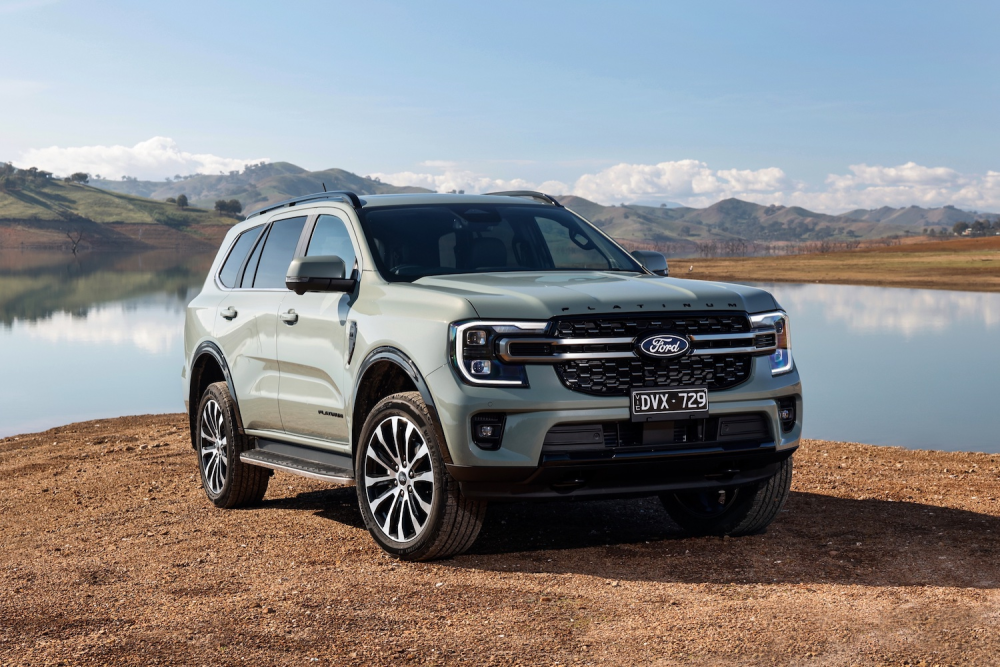
Tested: we drive the 2026.50 Ford Everest range
Based on the T6.2 platform that underpins the Ranger dual-cab, the Everest was developed right here in the land down under, for Aussie conditions. That fact has won it plenty of favour with new car buyers in particular.
Its Achilles’ heel was its four-cylinder engine options that featured a controversial wet timing belt. Ford has clearly taken note of customer feedback though, having revised the Everest lineup as part of a mid-year MY26.50 update to address this powerplant’s issues head-on.
To find out whether the Blue Oval brand has done enough, we headed to the company’s You Yangs Proving Ground in Victoria. Headlining the revised Everest lineup is the news that there is now a single four-cylinder diesel engine option available.
Gone is the twin-turbo 2.0-litre that was specific to this platform in favour of a globally-used version of the single-turbo 2.0-litre that now features a timing chain in place of that wet timing belt arrangement. Its outputs sit at 125kW and 405Nm.
With that comes a promiste of improved durability and fuel economy. Alongside it, Ford has widened the availability of the powerful 184kW/600Nm 3.0-litre V6 turbo diesel engine to now span the entire lineup. There’s also a new entry-level variant.
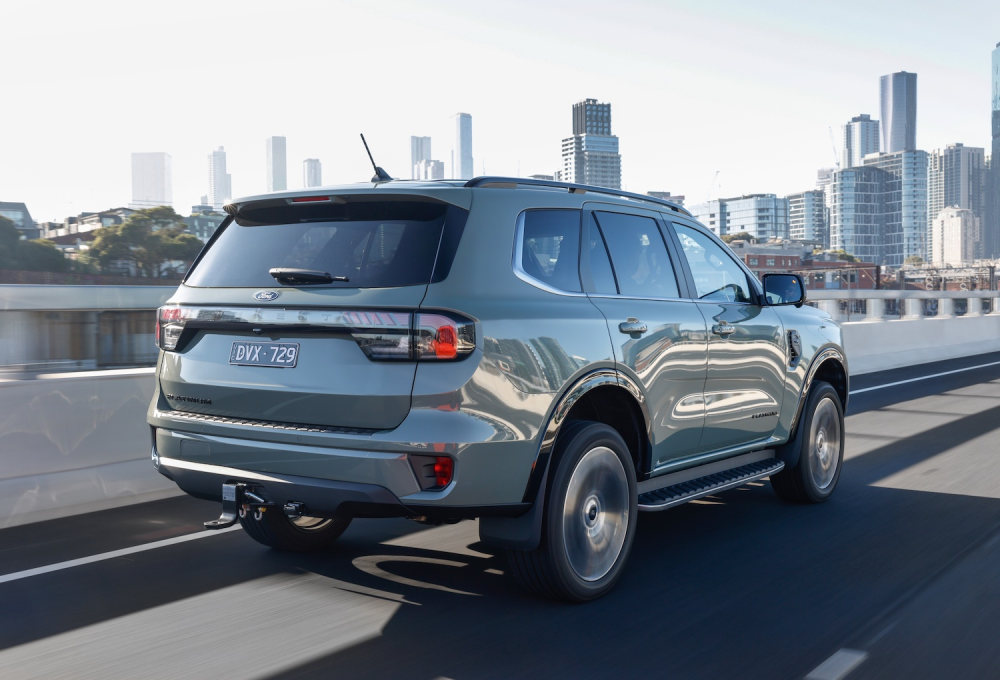
Known as the Active, it replaces both the Ambiente and Trend variants of before. You’ll find the Sport positioned directly above it and also available with the new 2.0-litre. From there, the off-road focused Tremor model comes standard with the V6, while the Wildtrak has also returned
The rather swish Platinum remains at the top of the tree. At the launch, we spent most of our time at the two bookends of the range in the Active 2.0-litre, priced at $60,000 drive-away, and the Platinum V6 which charges $83,490 before on-road costs.
You can find further details on the lineup in our pricing and specs story. The new Active variant offers a very compelling entry point to Everest ownership. Not only is it priced smartly, but it offers a strong amount of kit with black 18-inch alloy wheels and leather-accented seats.
It grabs rear privacy glass, a 12.0-inch infotainment display, and a tyre pressure monitoring system too. At the other end of the spectrum, the Platinum is a gorgeous thing inside with quilted leather-accented upholstery, and 10-way power adjustable seats with heating and ventilation.
You'll also find a heated leather steering wheel, panoramic moonroof, and 12-speaker B&O audio system. The Platinum is a slick thing on the outside too, riding on 21-inch alloys and sporting an optional new Acacia Green hue.
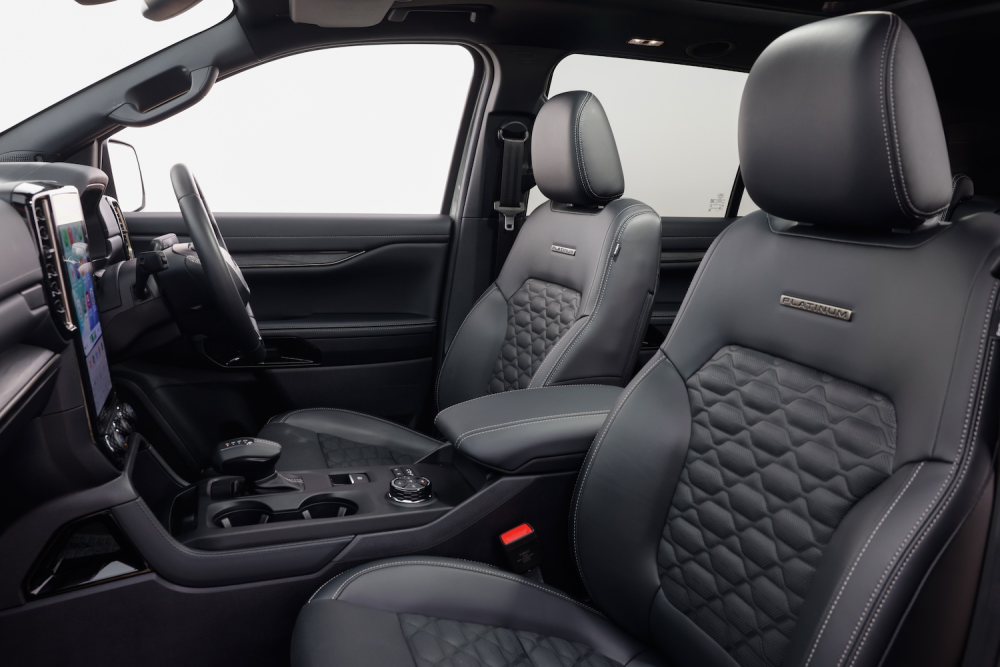
The “PLATINUM” lettering across the bonnet adds a nice Range Rover-inspired touch. There are no particularly major changes inside the Everest as part of this MY26.50 update, but that’s probably a good thing as its cabin still holds up incredibly well.
Across the board, it features a blend of good materials and excellent build quality inside, and its SYNC infotainment system is responsive and easy to use. All Everest models do come with three rows as standard, seating seven occupants in total.
For those buying the Tremor, the third-row seats can be removed as a no-cost option to increase boot space for off-road gear or custom touring setups. With that in mind, the real changes come out on the road, which is why we opted for the four-pot Active at every opportunity we could.
On the drive between Melbourne Airport and You Yangs Proving Ground, our press packet was set the challenge of achieving the best fuel economy possible. We saw an indicated return of 7.2L/100km, good enough for second best on the day and just shy of the 7.1L/100km claim.
It’s clear how much efficiency has been prioritised with this revised engine, as a new fuel injection system is among the other upgrades it has received. While its outputs might look a bit thin on paper, the standard 10-speed automatic transmission helps the little 2.0-litre remain right in the sweet spot.
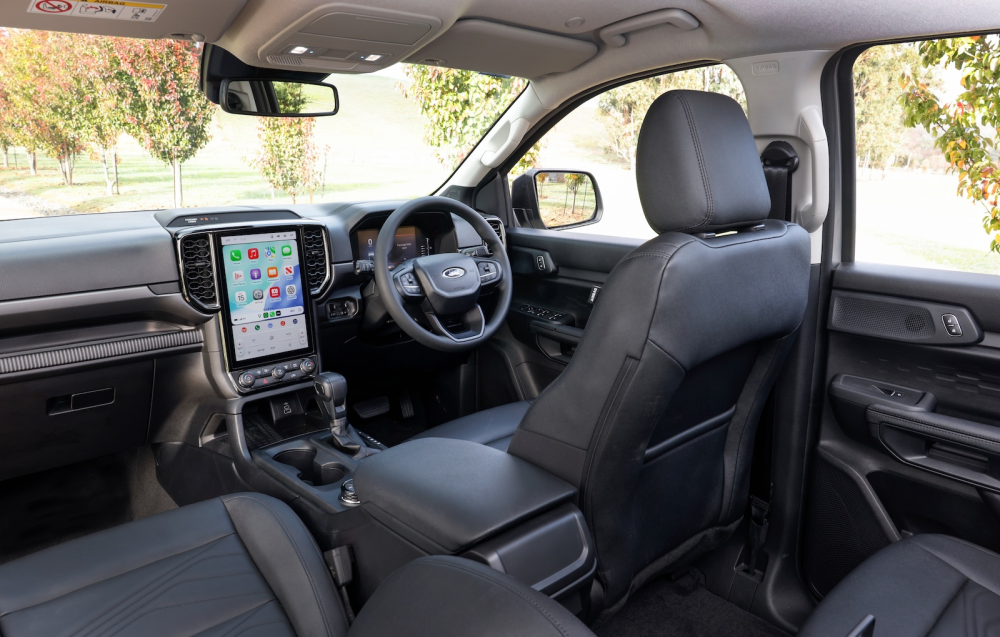
The transmission, offered across a number of Ford products, also feels far smoother and less busy here than it has in some other applications. Do note, though, that the four-cylinder only features a part-time four-wheel drive system rather than the full-time system offered with the V6.
Also noteworthy with this engine is how refined it is. Not only does it sound very muted inside the cabin, with no diesel clatter to be heard, this engine also feels refined as you take it up the rev range. Just don’t expect it to blow you away with performance along the way.
That’s where the punchy V6 comes in, with this popular engine option managing to hustle the Everest Platinum confidently, even with an extra 220kg of weight from its lavish kit-out. Simply lay into the throttle as hard as you like, and it delivers an immense wave of torque that won’t leave you wanting.
Thanks to coil springs front and rear, compared to rear leaf springs in the Ranger, the Everest handles more smoothly and has a far more compliant ride, with excellent rebound on undulating Aussie country roads.
The base platform might be the same, but there are plenty of changes to be felt behind the wheel. Now that the base four-cylinder engine has been revised, and given its impressive fuel economy, the Everest only adds even more appeal with this mid-year update.
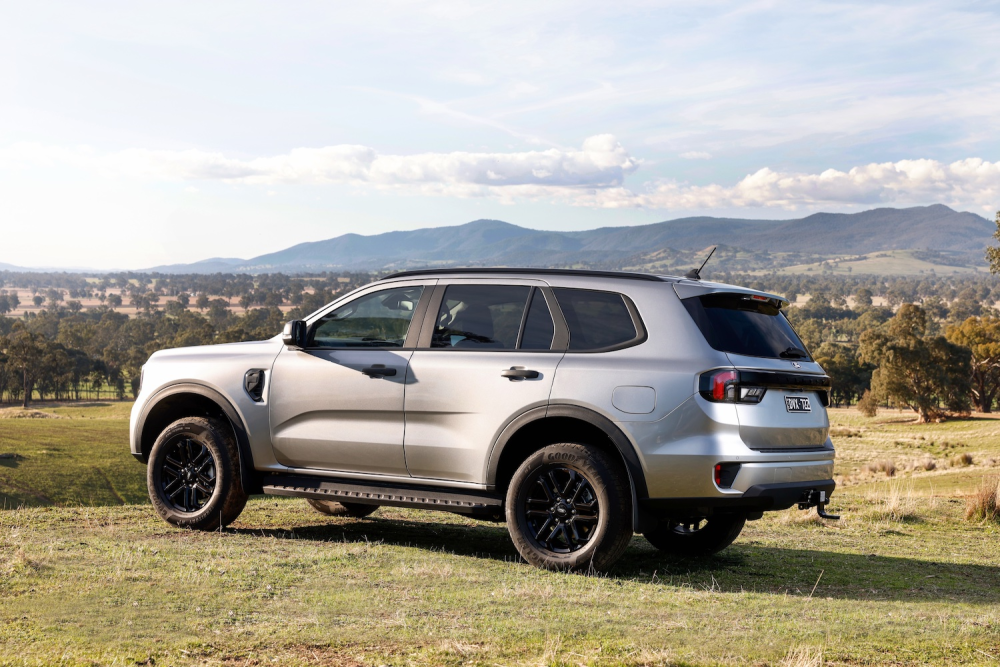
From sampling it at the home of its development, it’s also clear how focused it is for our market.
Our test vehicles were provided as part of a Ford Australia media launch event. This article first published on Exhaust Notes Australia.
Once you've found the right car, the next step is sorting out car finance that actually works for your budget. Credit One is Australia's best-reviewed finance broker, with 3,000+ five-star Google reviews from customers who've been through the process. Check out Credit One reviews to see what people say, or head straight to the loan repayment calculator to see what the numbers look like.