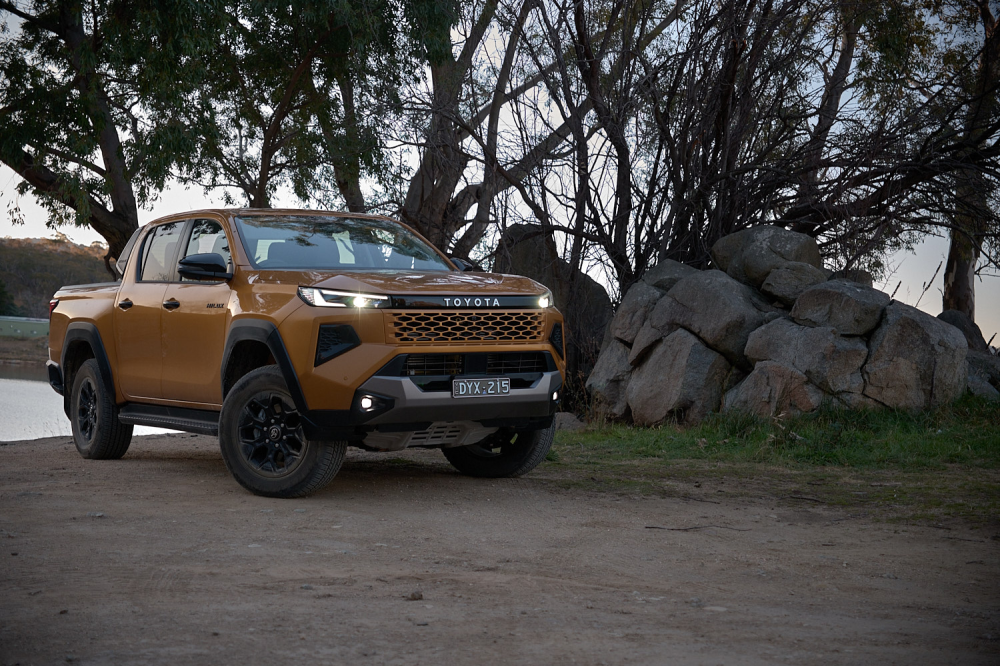
Driven: 2026 Toyota Hilux Rogue
Few cars deliver both, but for almost 60 years, the Toyota HiLux has been the all in one solution for work and recreation. The previous eighth generation version sold a staggering half a million units between 2015 and 2025 and topped sales charts between 2016 and 2022.
Needless to say, the new 2026 offering has some big shoes to fill. To see if Toyota has indeed filled those boots, we threw a dart at a map of NSW and found ourselves headed to the highest drivable point in Australia, in winter. Wise decision or not, we set off at midday on a picture perfect Friday.
Somewhat packed, somewhat ready and eager to see snow for the first time in most of our lives, our spirits were high. Of course they were, we had a HiLux Rogue, fitted with a 9-speaker JBL sound system.
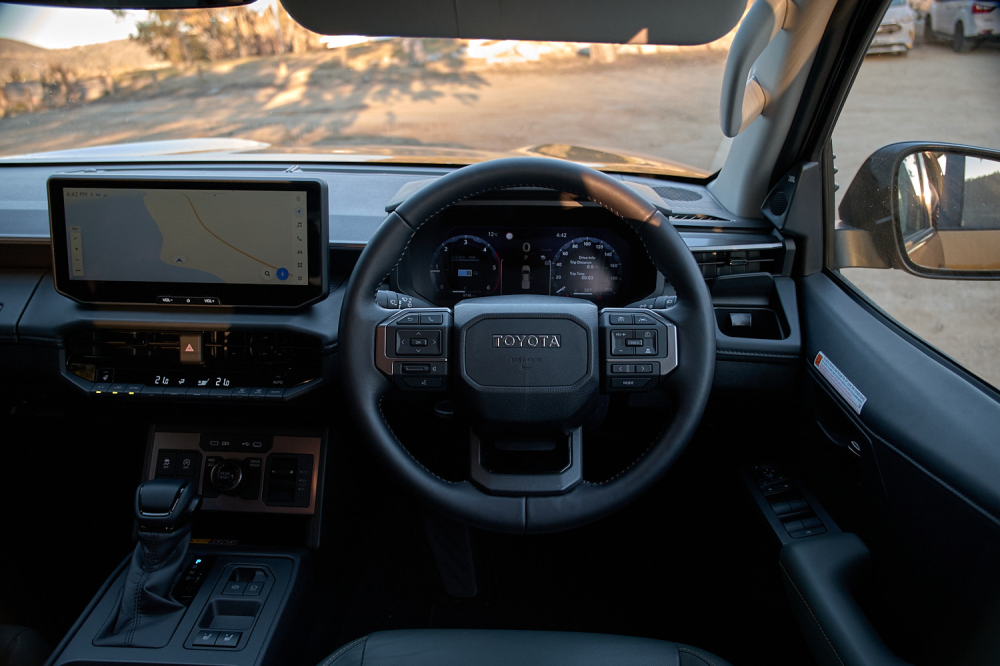
Paired with a new 12.3-inch infotainment display that is bright, responsive and intuitive to use, the system also features wireless Apple CarPlay and Android Auto. Dual zone climate controls sport actual physical buttons, but it’s not perfect.
The switches are all the same size and texture, so blindly feeling for them doesn’t really work, and you do have to look down. Now back to the journey at hand; with the tunes pumping, we turned onto the highway and headed out of Sydney.
The first thing you notice on the open road is the electric steering rack, a change that brings with it drastic improvements to lane keep assist. It now tracks straight as an arrow and combined with adaptive cruise control, makes long stretches at the wheel an easy task.
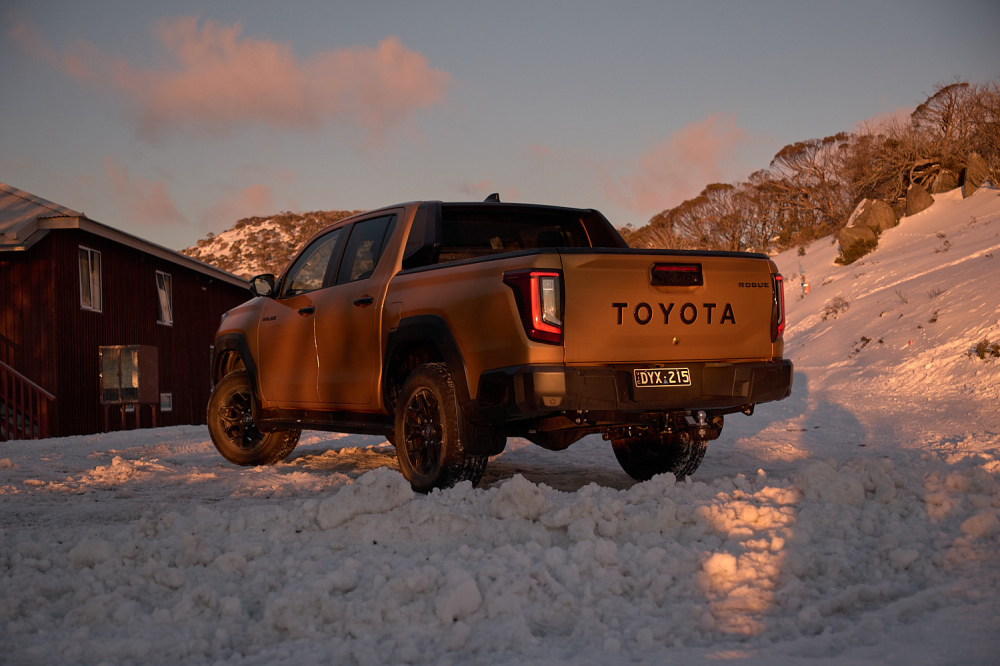
This is no small vehicle, standing at an impressive 5.3m long, 1.9m wide and 1.9m tall, all of which became apparent when we reached Goulburn for a quick bite to eat. Toyota’s 360-degree camera and parking sensors came into their own.
They’re part of a larger suite of driver assistance systems that also includes automatic high beam, lane departure, a full pre-collision safety system, speed sign recognition, blind spot monitoring and rear cross traffic alert.
From there, we went, well, Rogue, switching off the use highways/freeways option in the satellite navigation system and taking on some unpaved roads. This meant as darkness fell upon us, we relied on LED headlights to guide us.
The latter worked a treat, lighting up the gravel road ahead and alerting us to any critters that might be lurking in the scrub that edged the dirt. Unfortunately, the high beam component of said beams was a bit mediocre.
It simply didn’t throw light far or wide enough for country driving. The rough unpaved surfaces gave us a chance to test the updated suspension. All variants from the SR5 up receive a softer rear leaf spring, making for much better ride unladen.
It’s noticeable on the highway and even more so on the rough stuff, making the HiLux feel far more composed. The tray needs a special mention here too, as it’s the only one in the range that gets a tonneau cover and an LED lit marine carpet-lined tub.
After driving on dusty gravel roads for more than 100km, our bags were clean and dirt free. Arriving into Jindabyne, having spent six hours in the driver’s seat, I can confidently say that the 2026 HiLux is significantly more comfortable than its predecessor.
The leather wrapped seats are soft and supportive, and when combined with suspension tuned for comfort, the Rogue is a touring weapon. Soft touch materials can be found on the centre console arm rest and the door cards.
The steering wheel is clad in leather too, while you’ll also find fabric floor mats, with the combination working in unison to help quieten the car down. There are some harsh plastics atop the dash and in the footwells though.
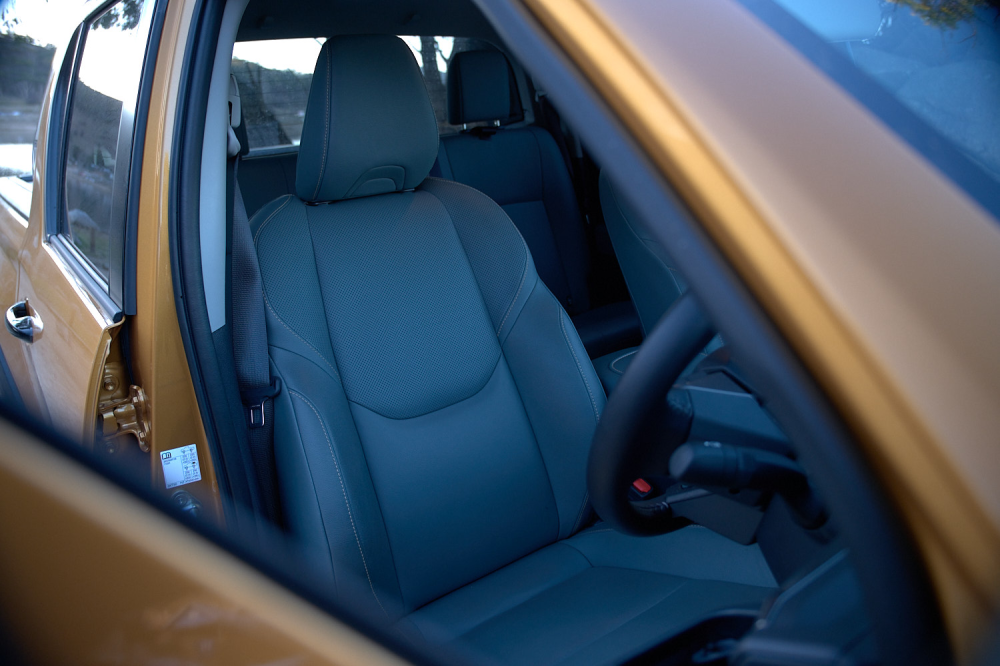
In minus 2-degree chill in the Snowy Mountains, the heated seats, steering wheel and mirrors are a God-send. That aside, one of the biggest selling points for the HiLux Rogue is the proven 2.8-litre 4-cylinder turbo diesel engine and 6-speed automatic transmission.
That’s paired with a 48v mild-hybrid system (which Toyota calls V-Active) to deliver 150kW and 500Nm, as well as an average of 9.0-litres/100km in terms of fuel economy (against a claimed 7.6-litres/100km).
There’s plenty carried over from the previous N80 HiLux, and that’s a good thing. Toyota hasn’t sought to reinvent the wheel, although the narrow tub (which doesn’t fit a standard pallet), remains. The upside is that it’s significantly easier to live with day-to-day, particularly when it comes to parking.
Regardless, under the cover of darkness, we pointed the car out of Jindabyne, and on to one of the highest drivable points on the continent. That brought a new set of challenges, including a winding mountain pass.
The same adaptive cruise and lane keep assist that worked wonders on the highway, found itself a bit gob-smacked on twisting roads. The calibration of the two systems felt more reactive than proactive.
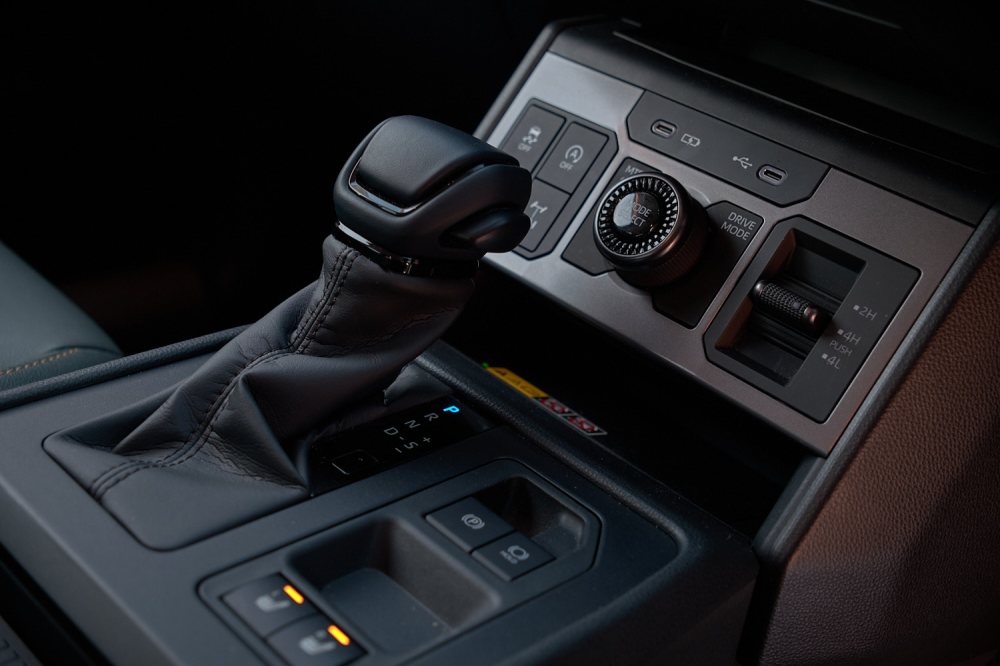
This was easily overcome at the press of a button, with the option to turn off the adaptive function and return to traditional cruise control.
This is communicated to the driver via the new 12.3-inch digital dash. Unlike the infotainment system, it can be a bit much. Toyota have done well to cram all the information in, but when you’re looking at pitch and roll angle and individual wheel traction, it gets confusing.
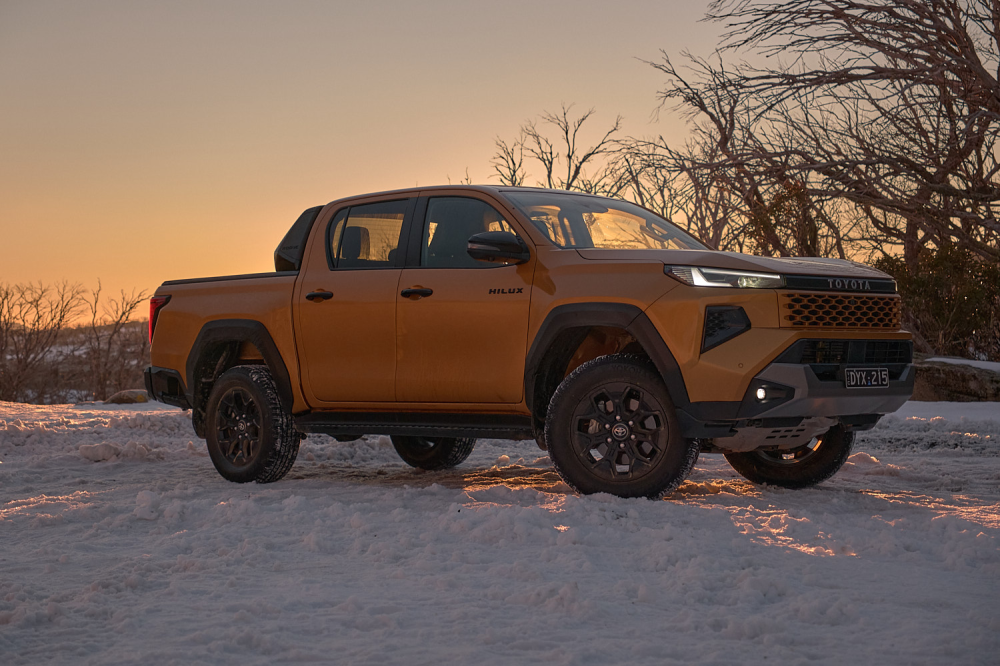
As we climbed and the temperature reading outside began dropping, we started to see snow off to the side of the road. Before too long, we were driving in it. It gave us pause to marvel at the fact the new HiLux is comfortable enough to do long stints on all types of terrain.
It got us thinking about the price. The Rogue, and its more off road focused Rugged X twin, are priced from $78,241 drive away. That’s pretty steep, but in this case, it’s for a vehicle that strikes a near perfect balance between work and play.
Available in Glacier White, Stunning Silver, Frosted White, Ash Slate, Eclipse Black, Feverish Red and Sunglow, it’s backed by a 5-year unlimited kilometre warranty.
This article first published on Exhaust Notes Australia.
Once you've found the right car, the next step is sorting out car finance that actually works for your budget. Credit One is Australia's best-reviewed finance broker, with 3,000+ five-star Google reviews from customers who've been through the process. Check out Credit One reviews to see what people say, or head straight to the loan repayment calculator to see what the numbers look like.