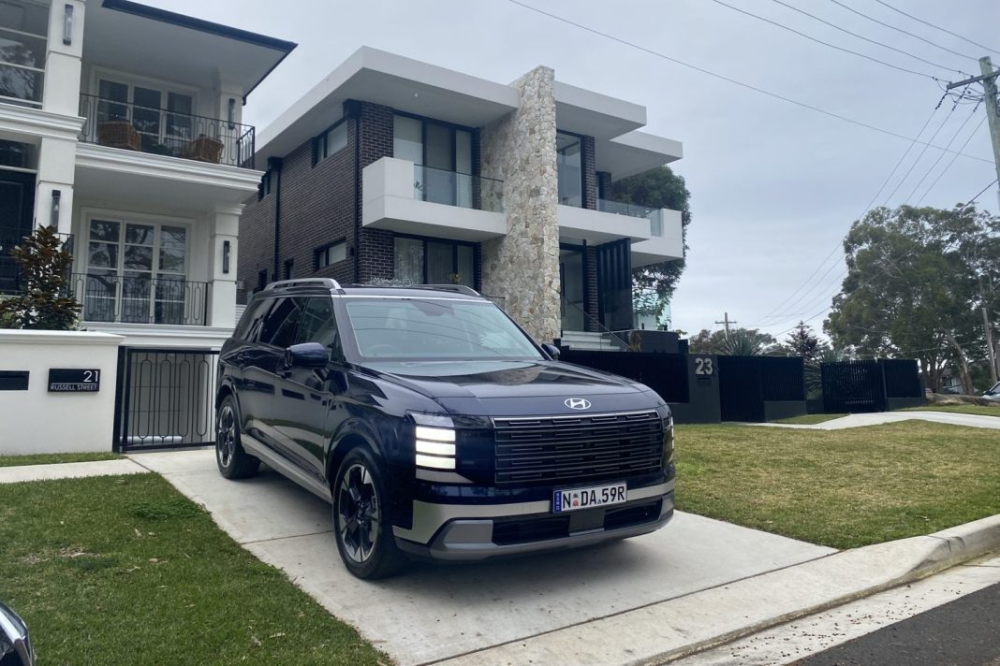
Tested: 2026 Hyundai Palisade Elite Hybrid
There’s little doubt the explosion in popularity of SUVs and people movers in the last decade has guided families towards space and practicality over pretty much all else. The 2026 Hyundai Palisade Elite Hybrid might just offer the best of both.
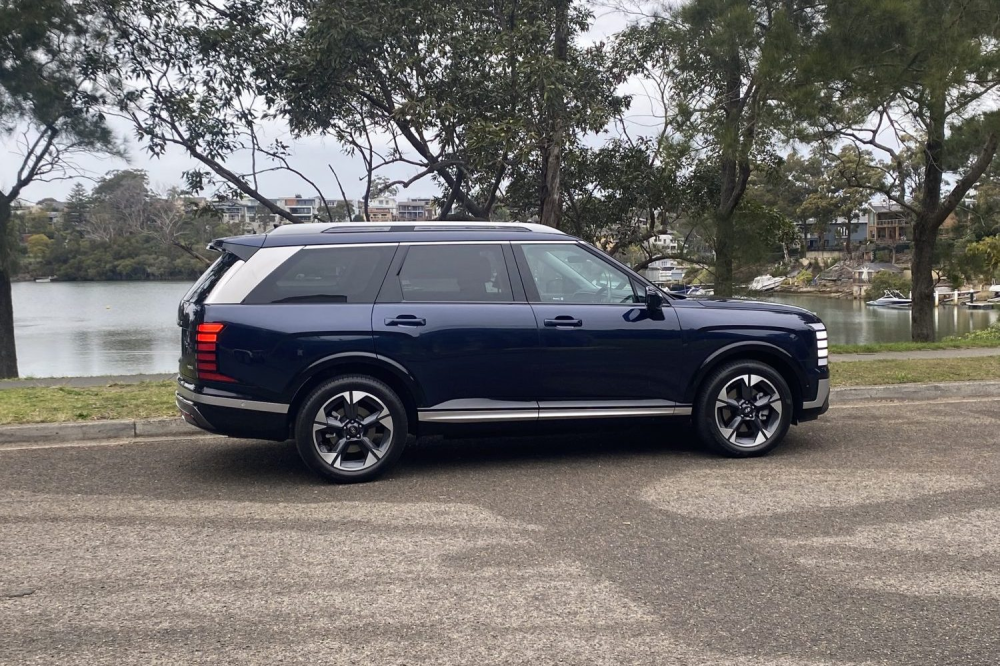
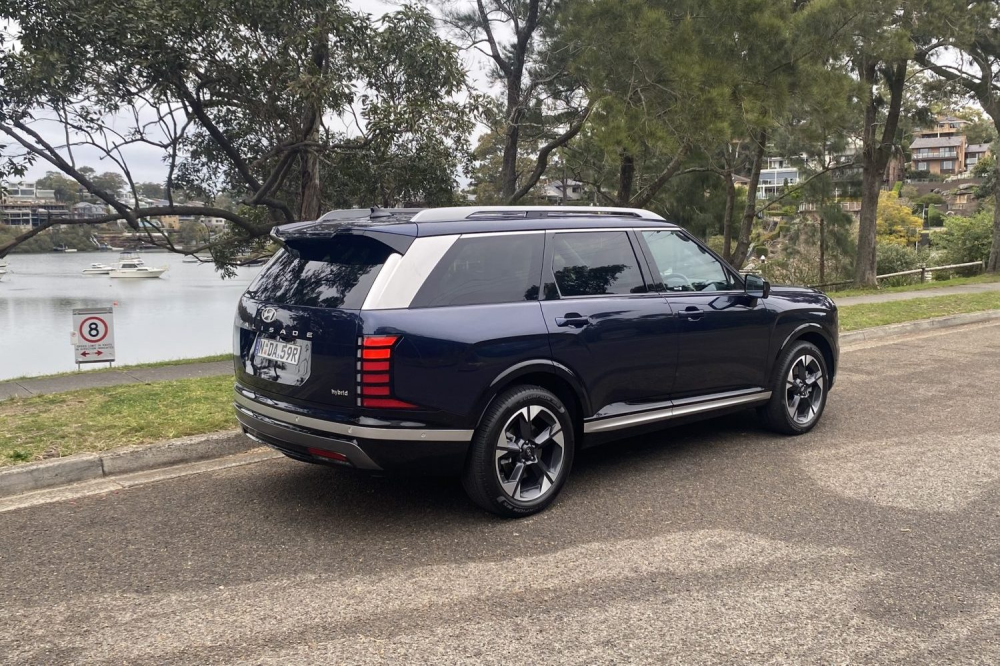
Draped in Classy Blue with silver trim, and offering 8-seats inside its just over 5000mm long body (that’s also 1975mm wide and 1750mm high), the Palisade is big, but unlike many vehicles its size, the exterior design is quite cohesive and well proportioned.
It has a commanding stance and could quite correctly be described as elegant. The horizontal front grille and five-strip headlight design gives it a bold and distinctive look. The attractive, 20-inch wheels add to that.
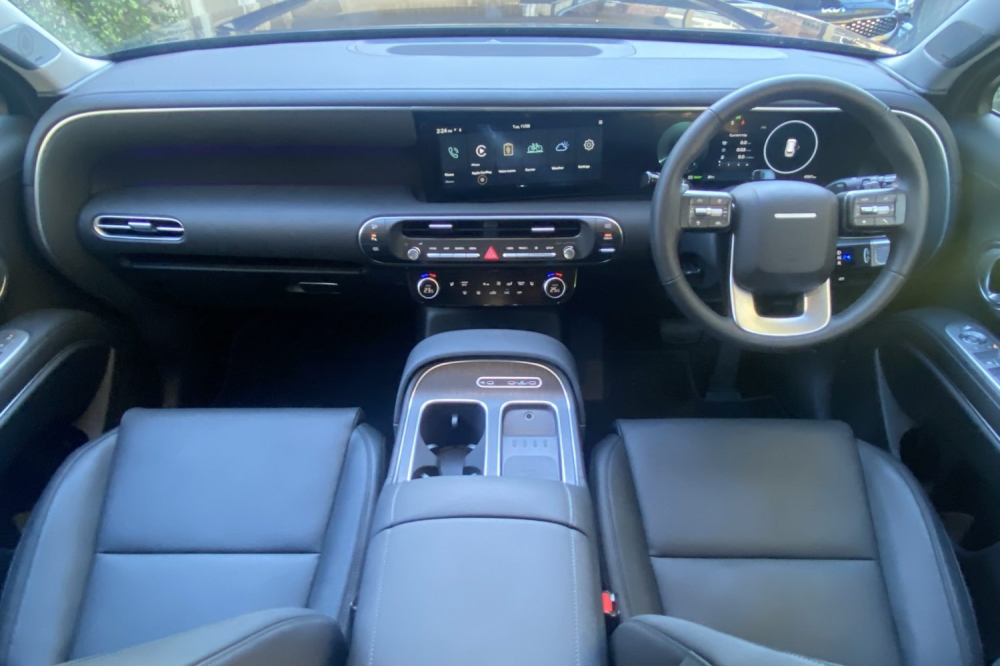
Shod with road-focused Pirelli Scorpion 255/50 R20 tyres you can access the interior using a smart key. Step inside and you’ll find a similar horizontal design them spanning the dash and a layout that the brand says is inspired by premium furniture.
It has an almost Scandinavian ambience to its sophistication, quality and simplicity. Sitting in the leather appointed, 10-way power adjustable driver’s seat, you face a 12.3-inch high definition digital cluster and identical touchscreen multimedia display.
The digital cluster contains a mix of useful information that can be understood at a glance, with four different visual themes on offer. These can be linked to drive modes or changed manually. The leather-appointed, multifunction steering wheel has a solid.
It has a comfortable feel and has the same sense of quality as the rest of the cabin. The controls have a logical layout, with tactile switches and buttons that operate with a precise action. Like other vehicles from Hyundai, the horn button is too small.
Like the gauge cluster, the infotainment system is well laid out and responds quickly to inputs. It is intuitive to use and allows access to audio, navigation and other functions. It has both wired and wireless Apple CarPlay and Android Auto.
This reviewer’s iPhone connected instantly every time, cord free. Physical controls below the screen provide support for volume, media sources and tuning. The quality of the 14-speaker, Bose setup is very good. Front seat passengers enjoy an array of amenities, including a wireless charging pad.
You’ll also find USB-C ports, a 12V power outlet, and climate controls. Both front seats are heated and electrically adjustable (10-way for the driver, 8-way for the passenger). The leather wrapped centre console armrest and dash add to the premium feel.
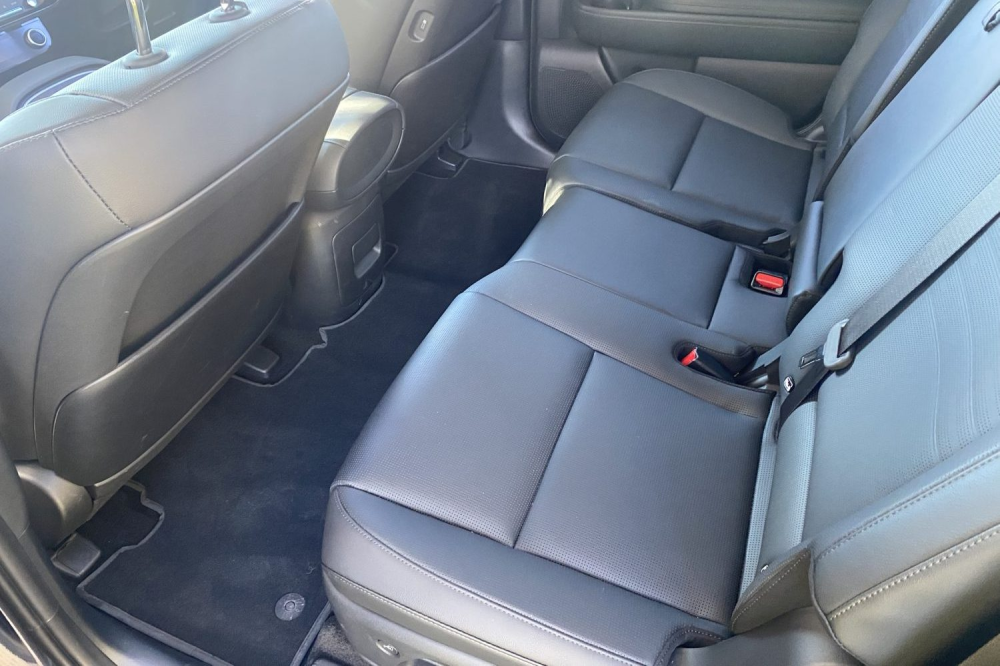
The middle row is comfortably wide enough for three people, as evidenced by three very happy adults we transported around Sydney on a two-hour journey. The seats have both backrest and seat base slide functions.
The floor is completely flat, with no intrusive transmission tunnel, so leg and foot room are ample. It’s a nice place to spend time, with wing-type adjustable headrests for the outboard seats, a centre armrest and USB-C ports within easy reach.
There’s also map pockets, good-sized door bins and roof mounted air vents (with their own controls). The all-important third row is one of the main reasons people consider the Palisade, and those buyers will not be disappointed.
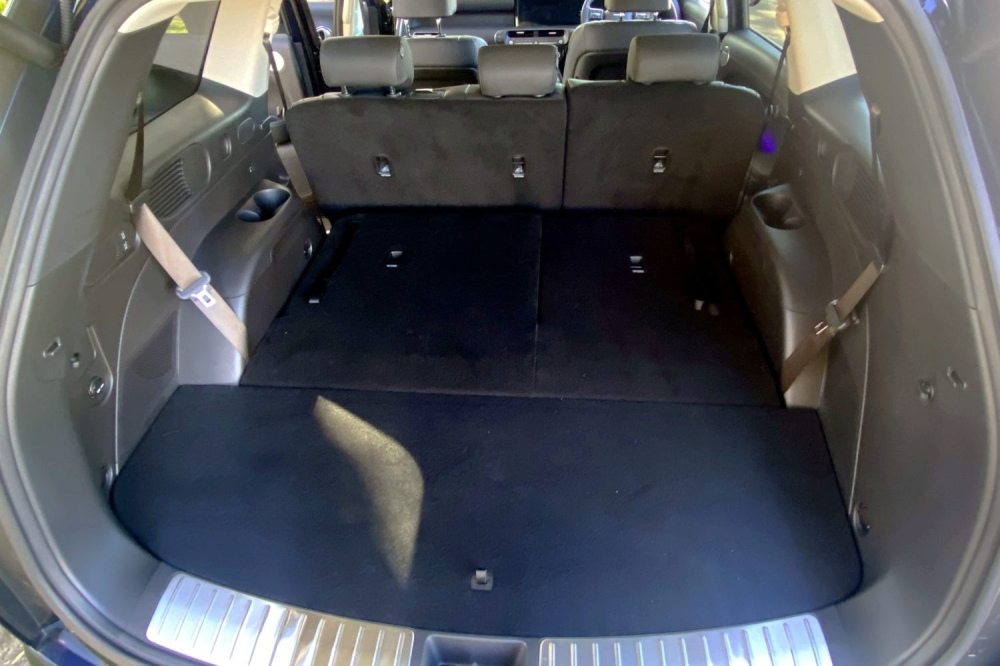
Our 8-seat version had room in the back for three adults, although it must be said that three children would probably find it more comfortable. Like the second row, it has a 60:40 split allowing flexibility for both passengers and luggage.
The backrest can be reclined for added comfort, a feature not often found in three row SUVs. Our third-row passengers were kept comfortable by roof mounted air vents, USB-C ports and, oddly, four cup holders.
Luggage space is competitive against rivals too, with 300-litres with all three rows in place, or 712-litres with the last folded down. That expands to a huge 2081-litres when you drop both rows. That’s more than say a Volvo XC90.
It’s easy to make the case that the Palisade is a very versatile vehicle, whether it’s carrying people, luggage or long, bulky items. In fact, it’s an SUV, people mover and utility, all rolled into one. But measurements are only numbers on a page.
In real-world use, the layout of the cabin and the flexibility of the folding seats meant that the cases and gear we carried fitted in with ease. There was no need to play Tetris trying to get everything in comfortably.
Driving the Palisade is an interesting experience. Over time and a number of kilometres, some aspects proved impressive while others were a little disappointing. It’s a big car that always feels, well, large. There’s no hiding it’s width on Sydney roads or in carparks.
This is neither a surprise nor a disappointment. The driving position is tall, and offers a very commanding view of the road. The front side windows are quite upright, with an almost rectangular profile, reinforcing the vehicle’s boxy design.
Standard Drive modes include Eco, Normal, Sport and Snow, while multi-terrain mode adds dedicated Snow, Mud and Sand settings for low-traction surfaces. It uses Hyundai’s HTRAC active on-demand AWD system.
It electronically varies torque between the front and rear axles to optimise traction and stability, according to driving conditions. Having said that, it’s not a proper off-road 4WD vehicle. There’s no rear diff lock, recovery points or substantial underbody protection.
Our Palisade was powered by Hyundai’s 2.5-litre turbocharged hybrid powertrain. The petrol engine produces 192kW and 353Nm, while the hybrid system brings combined output to 245kW and 460Nm. The electric motor is small, and assists the petrol engine.
It provides additional torque when required and recovering energy during deceleration. In the real world of Sydney traffic and local motorways, the Palisade has ample power. Acceleration from standstill to 100km/h is around 7.8 seconds.
That’s an impressive figure for such a large vehicle, and one which tips the scales at around 2,200kg. To put that into perspective, it’s around half a second quicker than the new Honda Prelude. Fuel economy is quoted by Hyundai at a combined 6.8-litres/100km.
We managed around 8-litres/100km in real world testing. That’s still extraordinary fuel economy in such a large and heavy car. The Palisade is surprisingly easy to drive. The steering is light and predictable, and the suspension does a good job of absorbing bumps and imperfections.
It’s composed and reassuring through bends, but doesn’t encourage enthusiastic driving. It’s quiet too, with very little tyre roar or road noise intruding into the cabin. Braking performance is reassuring, with no fade despite numerous drives up and down the notoriously steep Mount Ousley Road.
One area that really lets it down though is the driver assistance tech. The almost constant beeping and warnings become annoying very quickly. That’s particularly so when the school zone tone goes berserk at 10pm.
That aside, the Palisade is an exceptionally competent and impressive vehicle. With seating for eight, good cargo space, and a capable AWD system, it combines the practicality of a people mover with the versatility of an SUV, without many compromises.
Priced at around $83,500 drive away, it’s not exactly cheap, but it’s also not a low budget car. We believe the refinement, inclusions, quality and ambience is as good as, if not better, than cars costing a lot more from premium brands.
It can be had in one of six quite distinct colours and is backed by a 5-year unlimited kilometre warranty. That can be extended by a further two years when servicing with Hyundai. Prepaid service plans are available for three and five years.
A version of this article first published on Exhaust Notes Australia.
Once you've found the right car, the next step is sorting out car finance that actually works for your budget. Credit One is Australia's best-reviewed finance broker, with 3,000+ five-star Google reviews from customers who've been through the process. Check out Credit One reviews to see what people say, or head straight to the loan repayment calculator to see what the numbers look like.