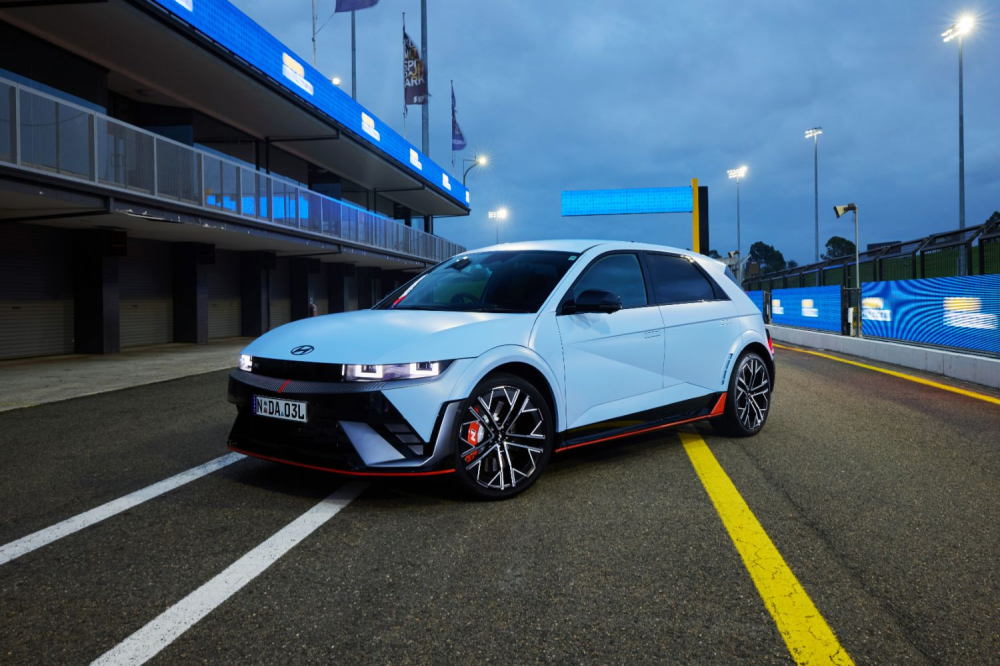
The ultimate EV sleeper: the 2026 Hyundai IONIQ 5 N
In the battle for your motoring dollar, not all that long ago, there were few choices that let you select an EV that was also a performance car, and if there was, they were pricey as hell. In 2024, Hyundai said “hold my charger”, releasing the IONIQ 5 N.
For those who don’t know, Hyundai N is the Korean car maker’s high performance sub-brand. The ‘N’ refers to both the Namyang District in South Koreaand the Nordschleife, or northern loop, of the famous Nürburgring racetrack in Germany.
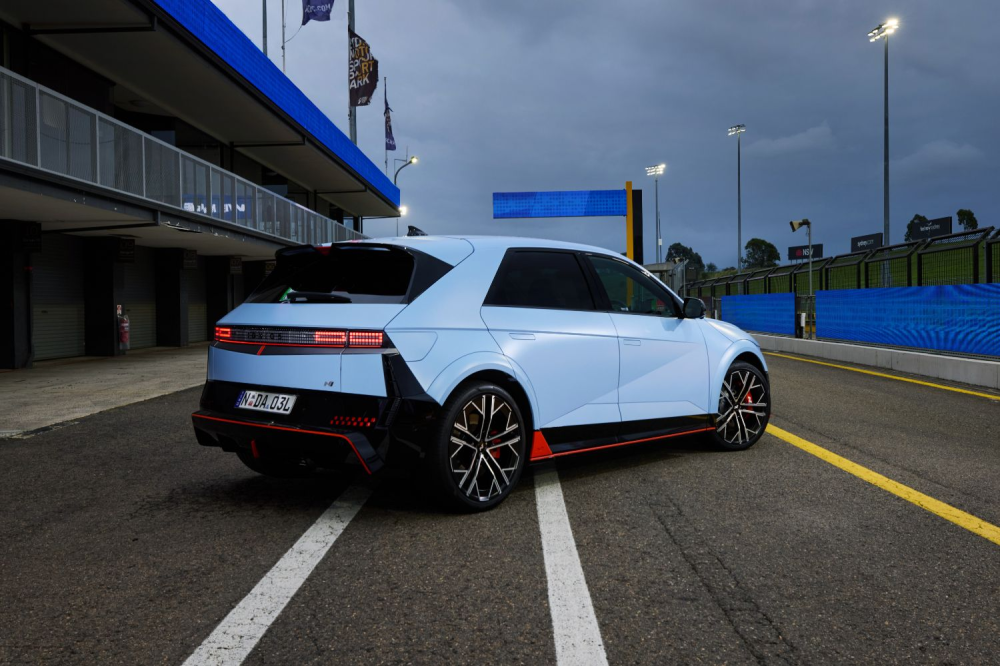
Draped in Performance Blue, in the case of our test vehicle, with red brake calipers and body accents, it gives off an air of innocence, mixed with a hint of aggression and capability. It’s also not a small car. Measuring 4,715mm in length, 1,940mm in width and 1,585mm in height, its design is unique.
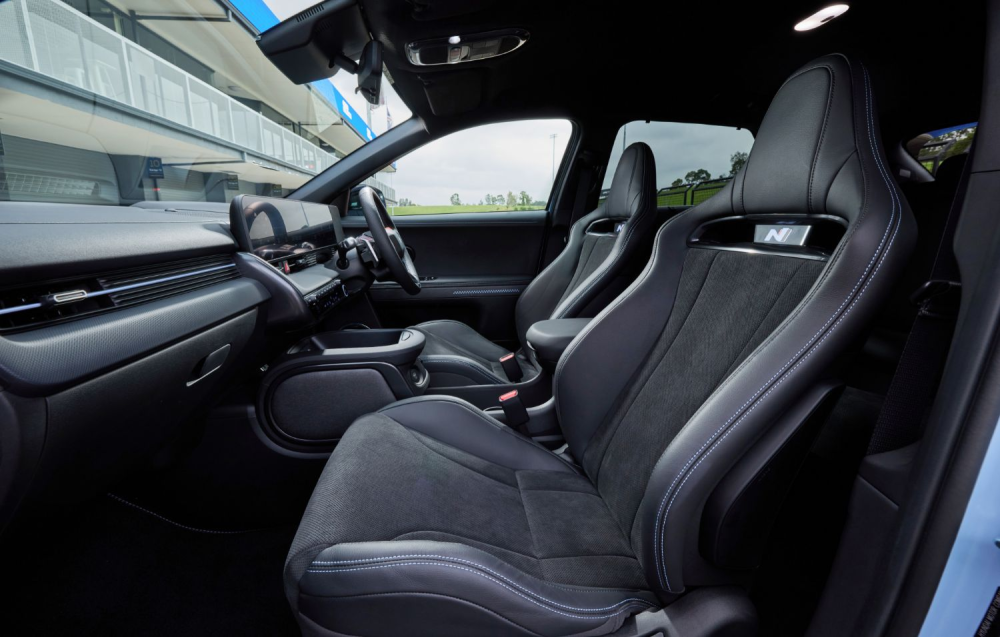
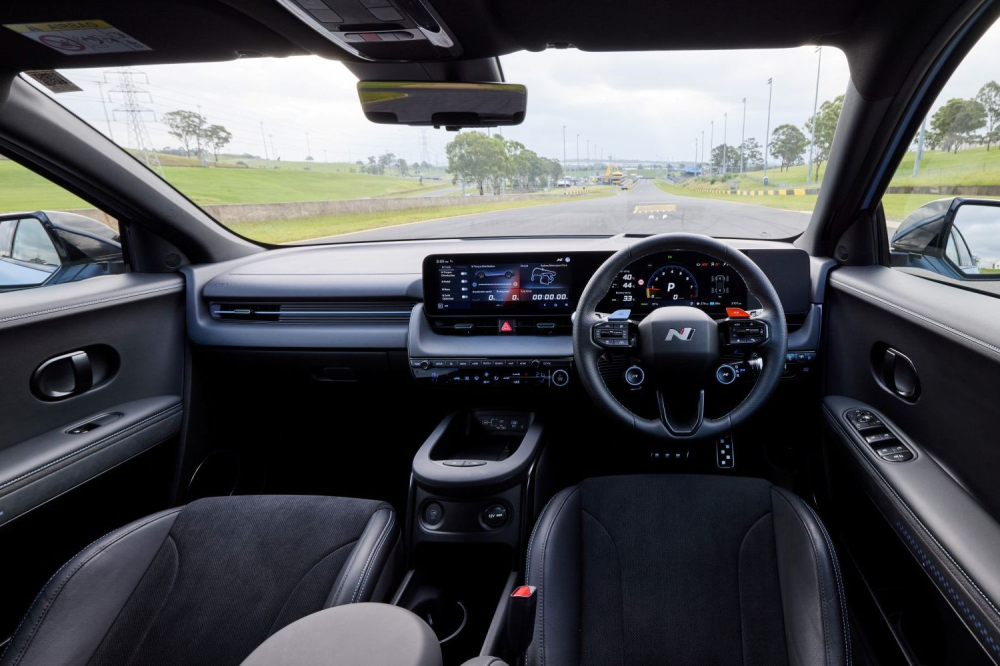
Quad headlights, a raked D-pillar, side creases and the overall stance bear a striking resemblance to a 1980s Lancia Delta Integrale – if you squint hard. Regardless, we like it. The interior is equally attractive, mostly. It’s spacious, and bright, thanks to the glass roof.
There are N logos everywhere, although some trims feel a little underdone. Plastics on the dash, door cards and centre console feel a little cheap. Ergonomically, there are a couple of little things too. The horn button is small, while the heating and ventilation controls for the front seats are hidden.
The infotainment system, a 12.3-inch unit, dominates the dash. It’s joined by a matching digital instrument cluster, with the duo paired with physical buttons and some capacitive touch sliders on their own screen, for things such as climate control. It’s a bit of a mixed bag.
The front seats are lowered, sport bucket-style units, and are finished in a combination of Alcantara and leather. Heavily bolstered, they wrap the driver in a supportive, almost competition-style driving position.
They’re manually adjustable, as is the case with multiple performance cars as a weight saving measure. The IONIQ 5 N is built on a dedicated battery-electric vehicle architecture called the Electric-Global Modular Platform (E-GMP).
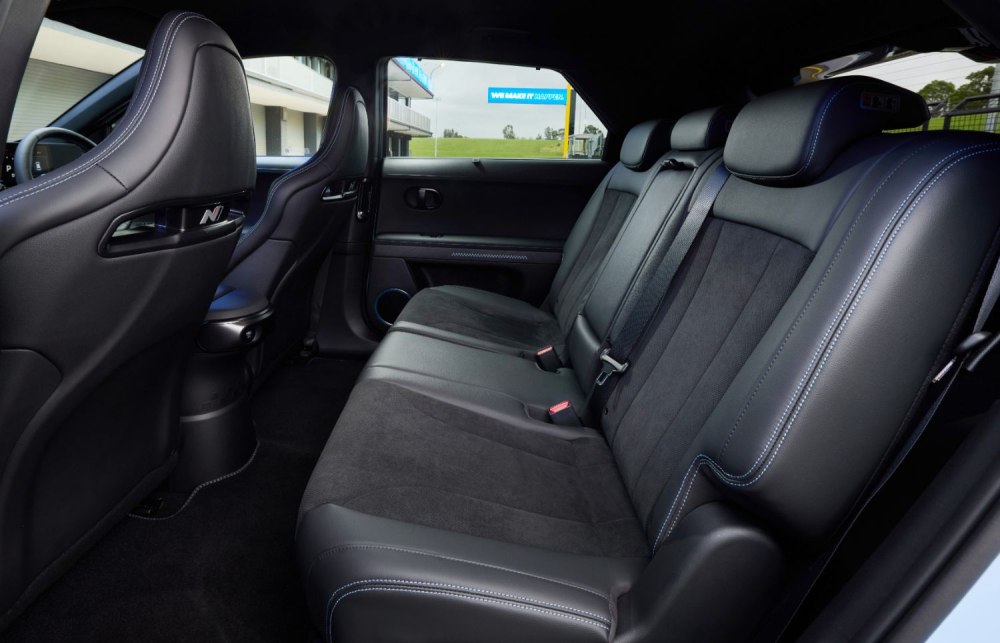
It has what’s known as a ‘skateboard design’, meaning that the battery pack is positioned low between the front and rear axles. The result, among other things, is a completely flat floor in the second row, and an exceptionally good centre of gravity.
Rear passengers benefit from heated outboard seats, rear air vents, USB-C charging, bottle holders and a fold-down arm rest. It’s certainly a roomy place to be. Cargo space is 480-litres with the second row up, or 1540-litres with it folded. There is no frunk storage.
On the road is where Hyundai’s IONIQ 5 N comes into its own. In outright performance stakes (3.4 seconds – 0-100km/h), it’s in the same league as the Ferrari Portofino, BMW M3 Competition, and Porsche 911 GT3.
What is staggering about that is the fact it achieves those numbers while tipping the scales at the better part of 2200kg. Power comes from a dual motor, all-wheel drive setup that delivers 448kW of power and up to 770Nm of torque (with N Grin Boost engaged).
The latter is a 10 second temporary power boost activated by pressing the NGB button on the steering wheel. Think of it as being similar to the over-boost function found on some high-performance turbocharged petrol cars.
Suffice to say, the IONIQ 5 N is blisteringly, insanely, quick. In a brief burst of spirited acceleration on a private road, one shocked passenger described it as “violent”, reminding them of the acceleration of the Formula Rossa rollercoaster at Ferrari World in Abu Dhabi.
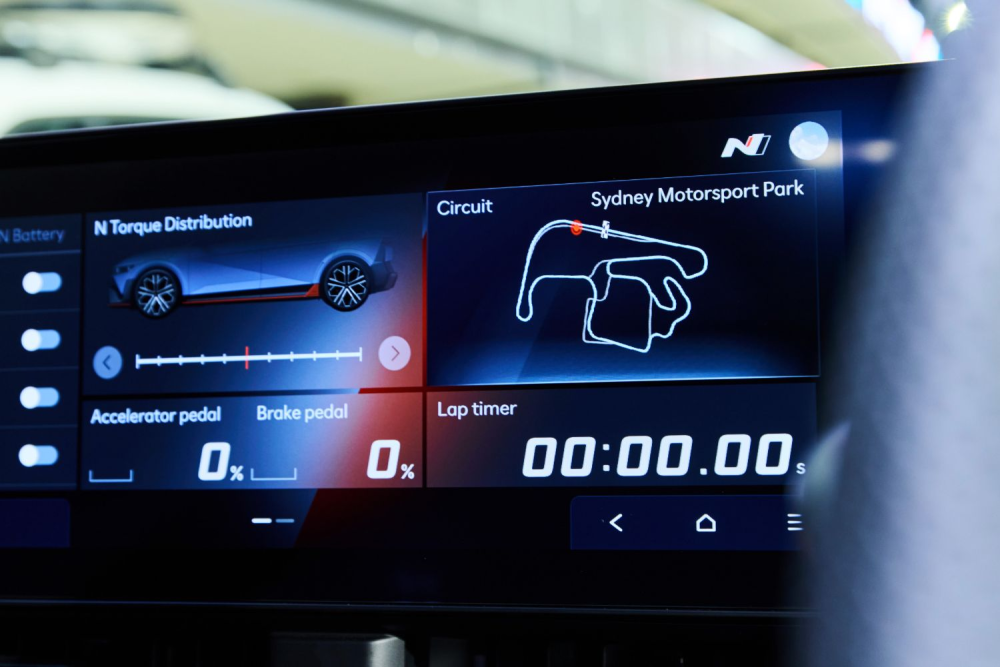
There are regular drive modes (Eco, Normal and Sport) that adjust the suspension, throttle and steering calibrations, ranging from firm to light, and assisted. There are also two custom modes and some separate N functions.
These include the aforementioned N Grin offering, as well as N Race for track use, N Pedal for aggressive cornering, N Drift Optimiser, N Torque Distribution and N Launch Control. That’s a lot to remember, but there are more.
As fast as it is, there are other electric cars which have similar acceleration and drive modes. None of them engage the driver in the same way as the IONIQ 5 N though. N e-Shift and N Active Sound+ make this particular vehicle extra special.
Combined, these make the car more interactive, giving the driver a greater sense of control, feedback and involvement than a conventional EV. They give the driver something to physically and audibly interact with.
The purpose of the N e-Shift function is to replicate an eight-speed dual-clutch transmission with interactive gear shifting. And yes, it actually has paddle shifters on the steering wheel. These allow the driver to shift up and down manually.
The system alters the torque output to create the sensation of changing gears. This is accompanied by simulated revs, engine braking and a momentary interruption in power between gear shifts.
The purpose of all of this is to transform the normally seamless acceleration of an EV into something that feels like driving a high-performance petrol car. The N Active Sound+ function provides a number of synthesised exhaust notes (for want of a better description).
Evolution offers a futuristic high-pitched whine accompanied by an artificial engine noise. It sounds a little bit ridiculous, but does provide some theatre, especially during acceleration and ‘gear’ changes.
Supersonic sounds like a jet fighter, while Ignition is the most convincing of the trio. It offers a deeper, more aggressive tone that goes some way in mimicking the character of a high-performance combustion engine.
The sound rises and falls with the simulated revs and responds to throttle inputs, making the car feel more mechanical and engaging than it otherwise would. It’s still clearly synthetic, but somehow impressive.
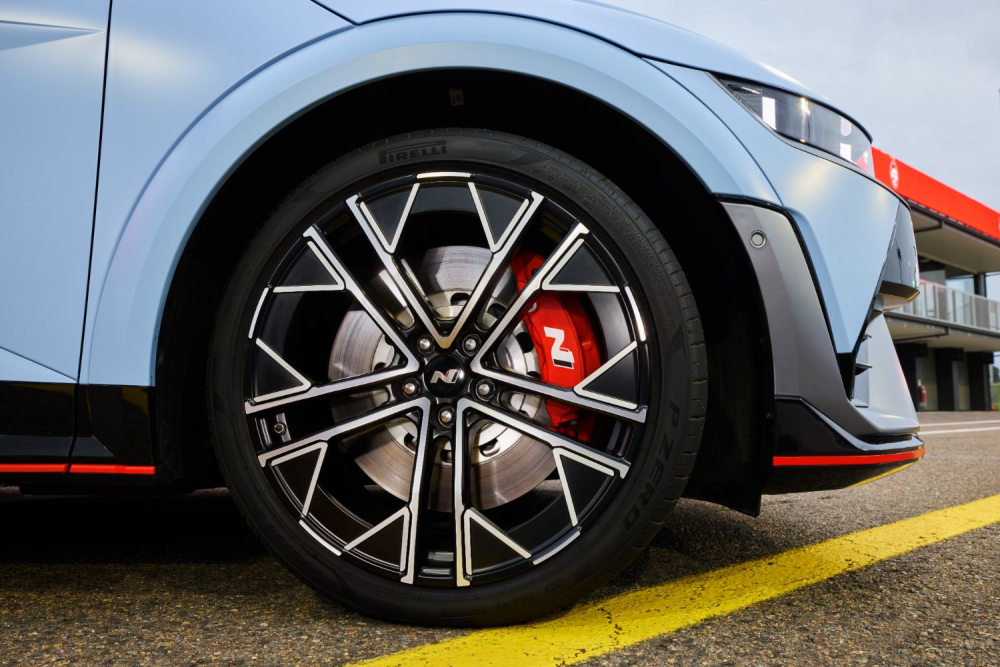
Regardless of what mode you’re in, or what drive sound you have playing, the ride comfort is solid given the car rides on 21-inch wheels, fitted with enormous Pirelli P Zero rubber. They provide a substantial footprint on the road.
Body roll is minimal and turn in impressively sharp, given the weight of the car. It’s nimble, and only in the firmer N mode setting does the car tend to bounce around over uneven surfaces.
Steering feel is confidence-inspiring, while traction is good, given the all-wheel drive system, and the car puts the power down cleanly, with no squealing when accelerating firmly from rest (which I did many times).
The weight of the car can be felt at lower speeds in the suburbs, but tends to disappear to some extent the faster you go. There’s no getting away from the fact that it’s a 2200kg vehicle but despite that, stopping power is exceptional.
Repeated hard braking from speed produced no discernible brake fade. Overall, the IONIQ 5 N delivers the performance and driver engagement you’d expect from an internal combustion go-fast offering, that’s simply bundled into an EV package.
It may feel digital at times, but Hyundai has done an impressive amount to make steering it, engaging and fun. For some, that will never be enough. They will always want the character, sound and involvement of a conventional performance car.
For many others, this car will put a very large N Grin on their face. At around $123,000 drive away, it’s a little expensive. That said, nothing delivers the performance, engagement and outright fun anywhere near that price.
It comes with a 7-year unlimited kilometre warranty when serviced by Hyundai, and the EV battery is covered by an 8-year or 160,000km warranty.
Once you've found the right car, the next step is sorting out car finance that actually works for your budget. Credit One is Australia's best-reviewed finance broker, with 3,000+ five-star Google reviews from customers who've been through the process. Check out Credit One reviews to see what people say, or head straight to the loan repayment calculator to see what the numbers look like.