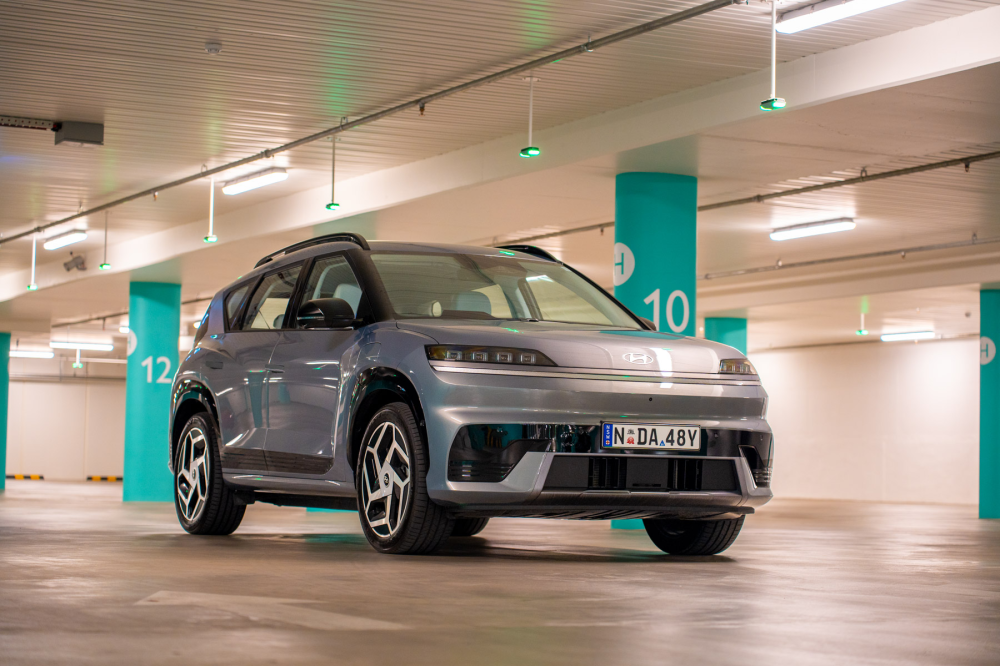
Hyundai's Kia EV5 sibling marches to its own drum beat
In the world of EVs, every manufacturer is looking for their own unique way to stand out. When it comes to the 2026 Hyundai Elexio, it’s clear that the South Korean company has put all its chips into the gimmicks category with its Chinese-built new offering.
It's not necessarily a bad thing, but it's definitely unique. Sharing a platform with the Kia EV5, the Elexio is the fifth pure EV to join the current Hyundai lineup. Importantly, it’s the first mid-sized SUV among the brand’s electric offerings.
Two variants are offered, with the unnamed base model starting at $58,990 before on-road costs while the Elite charges $61,990 plus on-roads. There is an introductory offer of $59,990 drive-away until June 30, 2026.
Although its EV5 twin is offered with a dual-motor setup, the Elexio is only available with a single-motor, offering 160kW and 310Nm through the front wheels. An 88.1kWh LFP battery pack is standard. Hyundai claims 546km range on the WLTP cycle for the Elite.
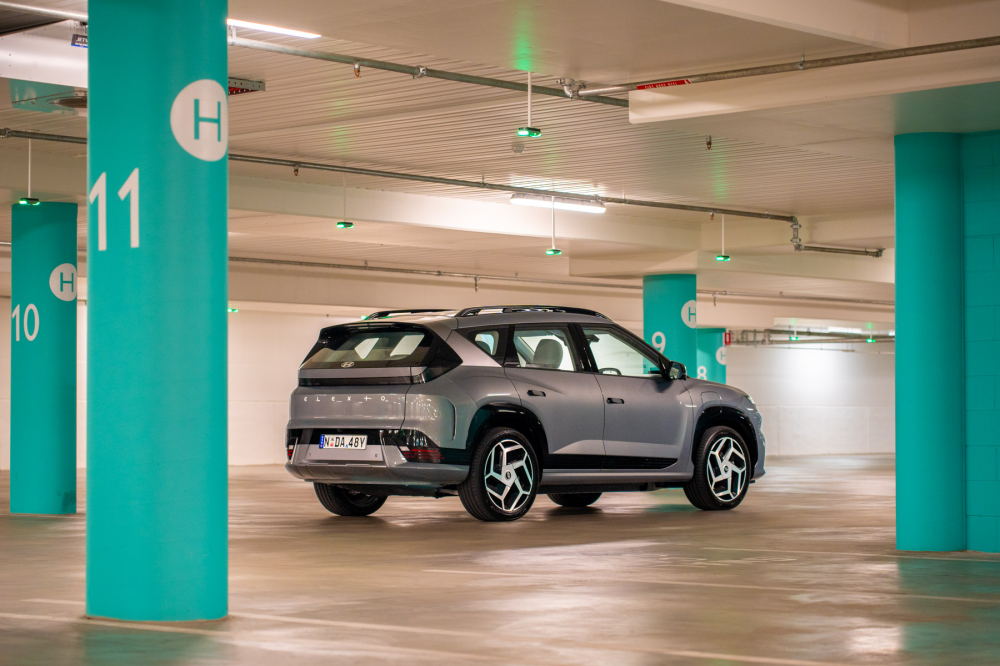
In terms of its dimensions, the Elexio is largely a parallel for the popular Tucson with it ever so slightly shorter, but a tad wider and taller. Crucially, it’s a noticeable step up in size over the Kona Electric, and from the outside, the design is quite approachable for an EV.
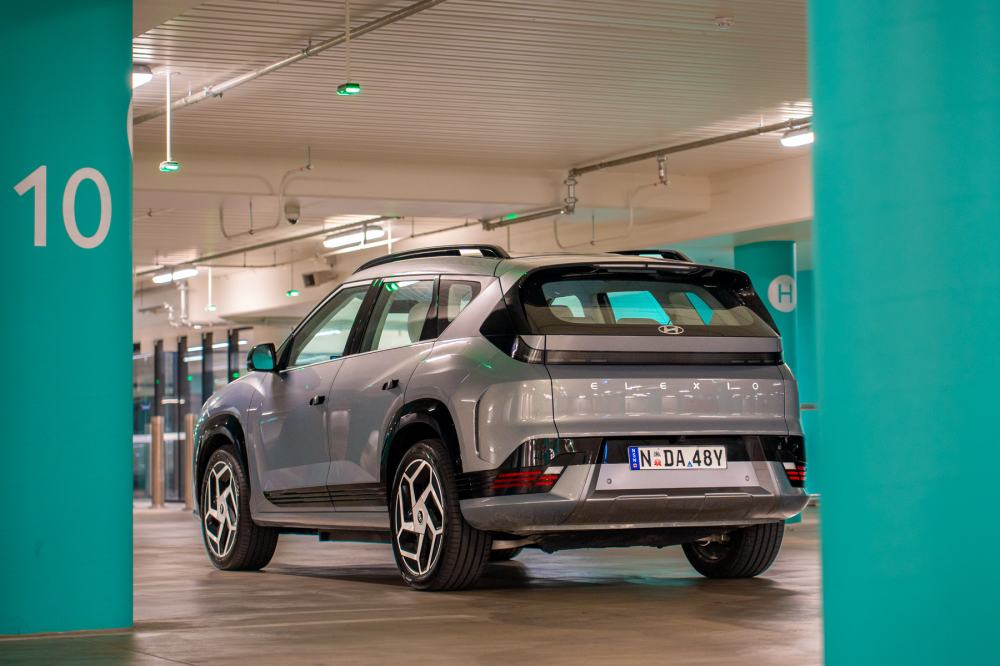
It may have no large radiator grille at the front, but the looks don’t exactly scream about its eco credentials. There are some fancy pants features to be spotted though. At the front, there are small flaps that can open and close to maximise radiator efficiency, for example.
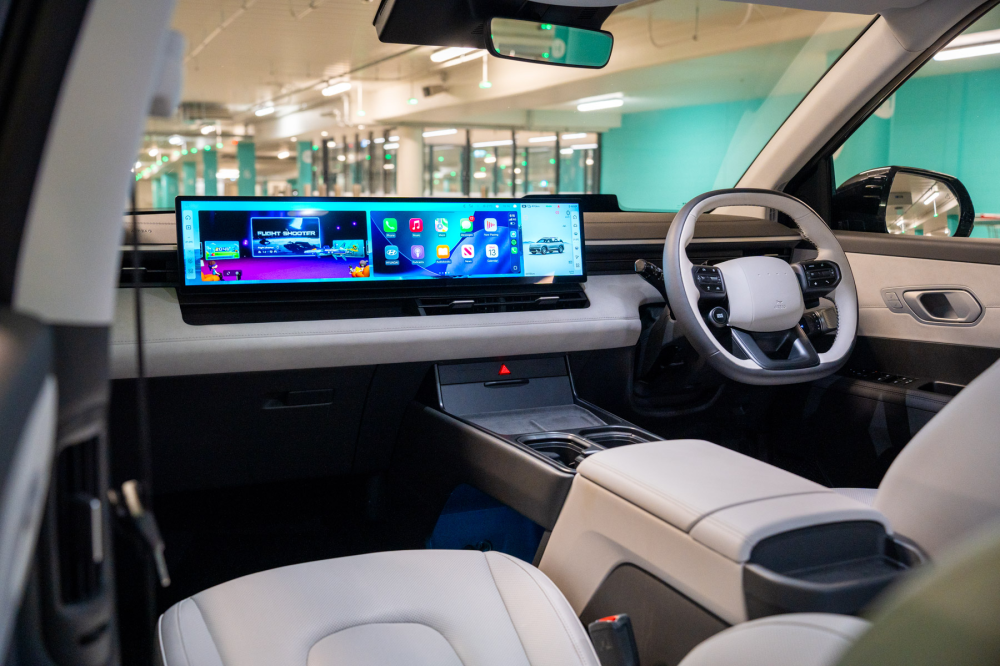
The retractable door handles add an aerodynamic touch to the sides. Blingy 20-inch alloy wheels are standard. It’s on the inside where you’ll find Hyundai has pushed the boat out. Jump behind the wheel and you’ll immediately see where the dashboard isn’t.
You’d be forgiven for thinking Hyundai has put everything bar the steering wheel back to front, but the design is quite deliberate. Featuring a massive 27-inch touchscreen, it’s positioned in front of the passenger and spans to the centre of the cabin.
Ahead of the driver, there’s just an empty space, although you will find a small head-up display that can cram in everything from the speedometer and relevant traffic signs to music or navigation directions. As a failsafe for the HUD, there’s a clearly Tesla-inspired segment on the big screen.
It features a speedo, key vehicle information including a read-out of lane lines and surrounding vehicles, and some infotainment shortcuts. Why put the screen on the passenger side then? So they can play games on it – seriously.
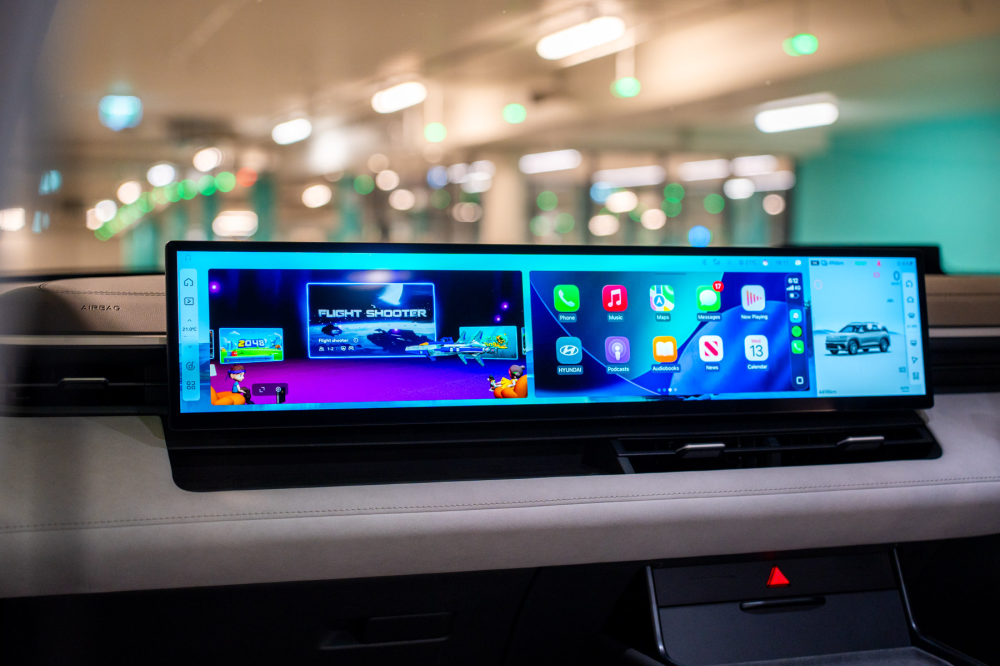
The system features a number of built-in arcade style games such as billiards, 2048, and ‘Flight Shooter’. Many of these have two-player modes, clearly designed for use while sitting at a charging station, although the screen position is a bit awkward for both front row occupants when playing.
That aside, there are also relaxing themes that can be brought up if you’re after a quick kip. A split-screen layout is also available, allowing you to bring up important functions for the driver such as wireless Apple CarPlay, although weirdly, this prevents the use of the blind-spot camera system.
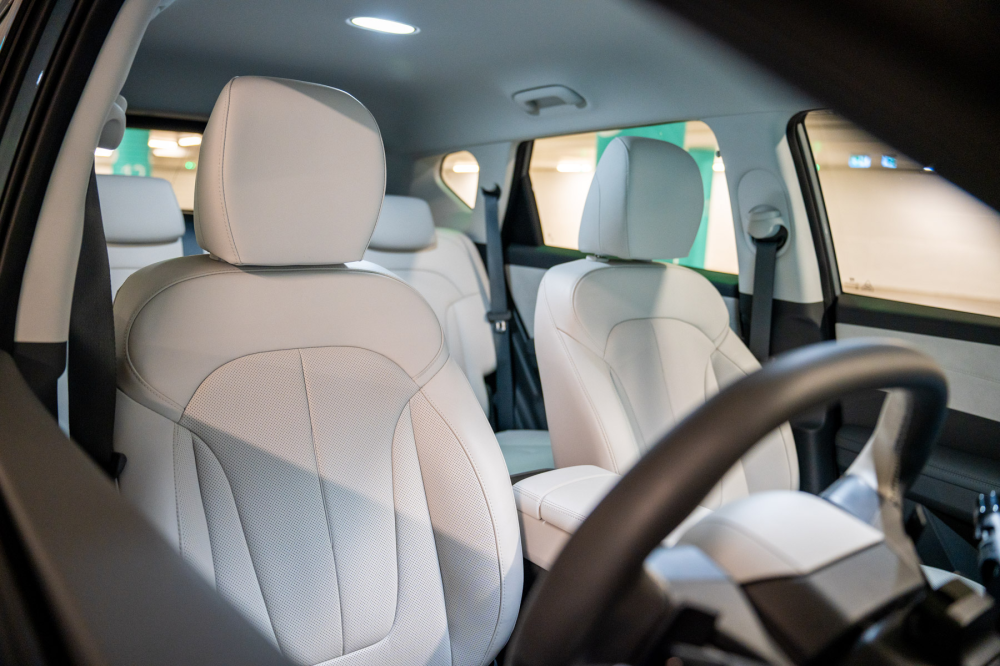
It’s also worth mentioning at this point that the audio system is nothing special either. It’s merely a basic six-speaker setup that sounds rather thin. The rest of the kit-out is impressive, however, with heated and ventilated front seats with 14-way adjustment for the driver.
A heated steering wheel, white leather-appointed upholstery, dual wireless charging pads, and a smart power tailgate are all standard. Aside from the quirky dashboard layout, the rest of the interior is great. It’s massively roomy with plenty of space to stretch out in both rows of seats.
There’s loads of storage including a big cubby under the floating centre console, and the 506-litre boot offers plenty of space and even a three-pin power outlet. You get over-the-air software updates so there’s no need to visit the service department constantly.
Bluelink Connected Car Services allow you to control vehicle functions from your smartphone. It’s not just on the inside that the Elexio differs from the EV5, as Hyundai has ensured it has another point of difference by treating this car to bespoke suspension and steering tuning for the Australian market.
Compared to the EV5, the Elexio feels far more responsive and connected to the road. Ride quality is good, with it soaking up most Aussie road surfaces fairly impressively, and the steering is nicely weighted for a mid-size SUV.
The only catch is that on some Adelaide Hills roads we drove it on, mid-corner bumps were quite prominent. Its dynamics are quite impressive aside from that. It feels more composed and confident than the wallowy Kia through the corners.
With power outputs as meagre as those on offer here, you’re unlikely to be taking this on such spirited drives on a regular basis. There’s no denying it could do with a bit more poke in that regard. Where the Elexio really feels in its element is on city streets.
Power delivery is smooth and responsive, with easily enough torque to keep up with traffic. The regenerative braking system is brilliant as well. While you can use the paddle shifters to manually adjust the level of it, there’s an intuitive ‘Auto’ setting that adapts to how others are driving.
This system lets you coast freely if the road ahead is clear, while slowing down for sluggish drivers you’re stuck behind even without the adaptive cruise control active. It’s the most intuitive-feeling version of this system that Hyundai has delivered yet.
The ride and handling feels well suited to city streets as well, remaining compliant over most bumps and easy to manoeuvre thanks to its light steering. Its semi-autonomous ‘Lane Following Assist 2’ system is also well calibrated in terms of keeping the car between the lines.
As with most Hyundai electric vehicles tested by yours truly, the energy efficiency claims feel fairly accurate as well. Across 479km of testing in a variety of conditions including regular freeway commuting, the Elexio indicated energy consumption of 18.7kWh/100km, equating to 471km range.
Compared to Hyundai’s claim of 18.2kWh/100km, that number comes impressively close. Depending on driving style and conditions, it was very easy to better Hyundai’s claim on certain stints behind the wheel, with a return of 17.8kWh/100km over the 240km after our first and only charge-up.
As with all Hyundai models, the Elexio is covered by a seven-year unlimited kilometre warranty. The battery pack is covered by a separate eight-year or 160,000km warranty. Were it not for the funky dashboard layout, it would be very easy to recommend the Elexio.
Its localised tuning makes it a far more suitable vehicle for our road conditions than many of the new EVs flooding the market. The design and build quality is also impressive inside and out, and its energy efficiency also means the range claims aren’t too far from the truth.
Whether the quirky dashboard layout works for you is going to be the big sticking point with this car.
Our test vehicle was provided by Hyundai Australia for independent review purposes. This article was first published on Exhaust Notes Australia.
Once you've found the right car, the next step is sorting out car finance that actually works for your budget. Credit One is Australia's best-reviewed finance broker, with 3,000+ five-star Google reviews from customers who've been through the process. Check out Credit One reviews to see what people say, or head straight to the loan repayment calculator to see what the numbers look like.